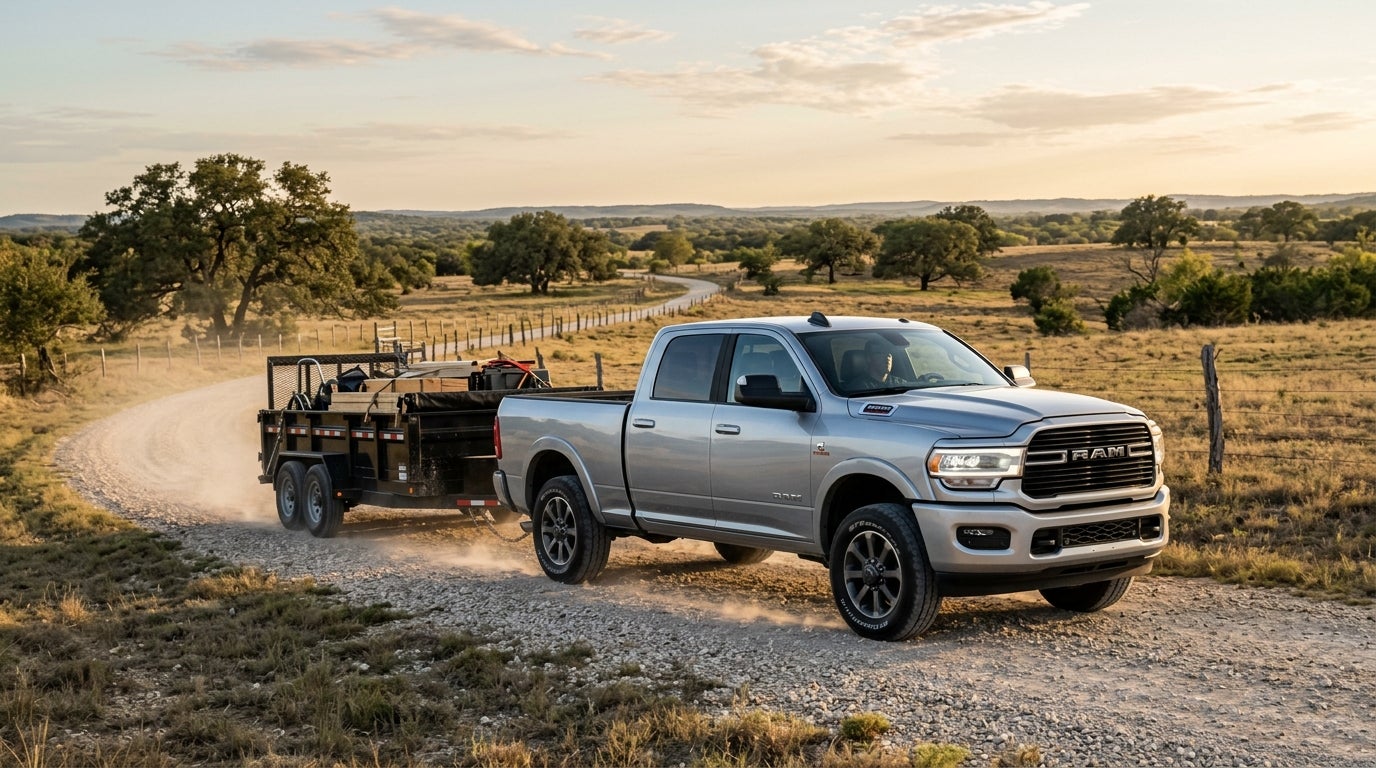





Gasoline heavy-duty trucks are often cheaper to own than diesel models because lower initial vehicle purchase costs, reduced routine maintenance expenses, and the complete elimination of diesel exhaust fluid offset the higher fuel consumption during moderate towing. To help truck owners understand these tradeoffs, we sat down with Mike Vasquez, Service Manager at Allways Atascosa CDJR, who brings 25 years of hands-on automotive and heavy-duty service experience to clear up common misconceptions about modern truck powertrains. Q: Why is gas often cheaper to own than diesel for heavy-duty towing? A: Gasoline heavy-duty trucks are often cheaper to own because lower upfront purchase prices, reduced routine maintenance expenses, and the absence of diesel exhaust fluid offset the higher fuel consumption during moderate towing. When buyers calculate total cost of ownership, they have to look far beyond the gas pump. A gasoline model avoids complex diesel exhaust aftertreatment systems, diesel fuel filter replacement schedules every 15,000 miles, and massive oil capacities that double the cost of every oil change service. For local farm and ranch operators around Pleasanton who use their trucks for daily utility, occasional hauling, and short trips between work sites, the gas engine avoids the costly repair scenarios that happen when modern diesel particulate filters cannot reach high operating temperatures. Gasoline powertrains warm up quickly, run cleanly during short drives, and maintain standard service schedules. You can explore our current heavy-duty inventory directly at our dealership showroom or speak with our service team at (830) 281-2244 to compare maintenance schedules for both powertrains. Q: How much more can the 2026 Ram 2500 diesel tow than the gas engine? A: When properly equipped, the 2026 Ram 2500 with the 6.7L High-Output Cummins Turbo Diesel achieves a maximum towing capacity of 20,000 pounds, which exceeds the 6.4L HEMI V8 gas engine rating of 17,750 pounds by 2,250 pounds. That additional towing capability becomes crucial for drivers pulling heavy fifth-wheel trailers, multi-car haulers, or massive equipment floats across long distances. The diesel powertrain also delivers a maximum gross combined weight rating of up to 28,000 pounds, giving commercial operators maximum legal pulling headroom. However, towing capacity is only half of the capability equation, because payload capacity moves in the opposite direction. The heavy cast-iron block of the turbo diesel engine adds significant weight to the front axle, reducing the truck's overall payload allowance. The gas-powered V8 configuration offers up to 3,930 pounds of maximum payload capability compared to 3,600 pounds for the diesel version. Shoppers comparing pre-owned Ram models alongside our new Ram inventory should carefully calculate fifth-wheel pin weights, because heavy tongue loads often consume payload limits long before hitting total trailer towing maximums. If your towing needs are lighter, our showroom also carries versatile options like our new Jeep models for everyday adventure. Q: What are the horsepower and torque differences between the Ram 2500 diesel and gas V8? A: The available 6.7L High-Output Cummins Turbo Diesel generates 430 horsepower and 1,075 lb-ft of torque, while the standard 6.4L HEMI V8 delivers 405 horsepower and 429 lb-ft of torque. The defining performance distinction lies in where and how that rotational force is produced. The Cummins diesel reaches its massive torque peak low in the RPM band, providing immediate pulling force right off idle without requiring the engine to rev high. The gasoline V8 relies on higher engine speeds to produce its power, mating with a smooth-shifting automatic transmission to keep the engine in its optimal powerband under acceleration. For drivers who want dependable performance without diesel fuel filters or DEF, the gas V8 remains a muscular choice for heavy-duty work. Keeping either powertrain running properly requires routine care, which you can easily manage using our online service scheduler. Buyers seeking long-term ownership confidence can also look for certified vehicles in our CARFAX 1-owner inventory, backed by the comprehensive support of our Allways Appreciating You customer program. Q: Why is low-end torque so important for towing across South Texas flatlands and hills? A: Low-end torque allows heavy-duty trucks to pull heavy trailers off a complete stop and climb highway grades without constant gear hunting or high-rpm engine strain. When launching a heavy trailer from a stop, high torque at low engine RPM moves the load smoothly without slipping clutches or forcing the transmission to flare up to elevated engine speeds. "When you are pulling a loaded livestock trailer off a gravel approach in triple-digit heat, torque low in the rev range is what keeps the truck calm and composed." When navigating elevation changes and rolling terrain near Boerne, low-RPM torque enables the truck to maintain steady cruise speeds against stiff headwinds or subtle grade increases without forcing gear downshifts. That lower operating speed keeps engine temperatures controlled during hot summer driving. Drivers considering trading in their current truck can evaluate their current vehicle using our online trade evaluation tool, schedule routine maintenance on our oil change scheduling page, or connect with our experienced specialists through our dealership staff directory. Q: How does diesel engine exhaust braking improve towing safety in high-heat conditions? A: A factory turbo exhaust brake uses engine backpressure to decelerate the vehicle on downgrades, significantly reducing mechanical brake temperature and preventing brake fade in extreme ambient heat. When descending highway grades with a heavy trailer attached, relying solely on foot brakes generates massive friction heat that can degrade stopping power and warp brake rotors. The variable-geometry turbocharger on the Cummins diesel restricts exhaust flow when activated, transforming the engine into a power-absorbing air compressor that slows the entire rig naturally. In high-heat conditions where ambient temperatures already stress trailer brakes and wheel bearings, engine exhaust braking preserves mechanical friction linings for complete stopping control when you actually need them. Commercial operators who need this braking control can start financing through our online credit application, explore heavy-duty work trucks in our commercial truck inventory, or learn about our service commitment on our dealership overview page. Q: What is the initial price difference and long-term cost comparison between Ram diesel and gas trims? A: Upfront acquisition costs for the 6.7L High-Output Cummins Turbo Diesel carry a substantial premium over the standard 6.4L HEMI V8, making gas models significantly cheaper to purchase initially and less costly to maintain over typical ownership cycles. The diesel option represents a higher upfront investment, requiring buyers to weigh whether their annual towing mileage justifies the higher initial expenditure and ongoing operational costs. Routine maintenance costs over a five-to-ten-year ownership window further widen the cost gap between the two engines. The Cummins diesel requires specialized heavy-duty engine oil with larger crankcase capacities, two distinct fuel filters that require replacement at regular intervals, and periodic refills of diesel exhaust fluid. The gas V8 operates on standard oil change capacities, uses conventional oil filters, and requires no exhaust additives. Shoppers looking for quick maintenance without appointments can visit our Express Lane service center, browse our well-maintained pre-owned inventory selection, or estimate monthly payments using our buying power calculator. Q: When is the 6.4L HEMI gas engine the smarter towing choice for towing? A: The 6.4L HEMI V8 gas engine is the smarter choice for truck owners who tow moderately or occasionally, perform frequent short trips, or require maximum bed payload capacity rather than extreme trailering limits. If your typical routine involves driving short distances to local job sites or hauling heavy cargo directly in the truck bed, the gas engine provides optimal utility without the risk of clogging modern diesel emissions systems. Across popular trim configurations like the Tradesman, Big Horn, Power Wagon, and Limited Longhorn, the gas engine delivers responsive performance backed by Ram's powertrain limited warranty. Choosing the right engine comes down to an honest assessment of how you will use the truck day in and day out. Stop by our Pleasanton showroom location today, contact our friendly team at (830) 281-2244, or explore flexible purchasing options on our financing options page to find the exact heavy-duty powertrain matched to your workload. © 2026 Allways Atascosa CDJR. All rights reserved. { "@context": "https://schema.org", "@graph": [ { "@type": "NewsArticle", "@id": "#article", "headline": "2026 Ram Diesel vs Gas Engine: Heavy-Duty Towing Guide with Expert Insights", "datePublished": "2026-08-06T16:43:40.705Z", "dateModified": "2026-08-06T16:46:51.439Z", "author": { "@id": "#author" }, "publisher": { "@id": "#dealer" }, "wordCount": 1348, "description": "An expert guide comparing total ownership costs, maintenance expenses, and towing capacities between 2026 Ram heavy-duty gas and diesel engine options." }, { "@type": "AutoDealer", "@id": "#dealer", "name": "Allways Atascosa CDJR", "description": "Allways Atascosa Dodge Chrysler Jeep Ram, where we Allways treat you like family.", "url": "https://www.atascosacdj.com", "telephone": "+18302812244", "sameAs": [ "https://www.facebook.com/atascosacdjr", "https://www.instagram.com/allwaysatascosacdjr/", "https://www.youtube.com/@atascosacdj", "https://maps.apple/p/ePJKtWw5L6.b86", "https://www.yelp.com/biz/allways-atascosa-chrysler-dodge-jeep-ram-pleasanton-3?osq=allways+atascosa+cdjr", "https://www.dealerrater.com/dealer/Allways-Atascosa-CDJR-review-21466/", "https://www.cargurus.com/Cars/m-Atascosa-Chrysler-Dodge-Jeep-sp63223", "https://www.carfax.com/Reviews-Atascosa-Chrysler-Dodge-Jeep-Pleasanton-TX_F60X0Q8WO1", "https://maps.google.com/?cid=6181620104188588384" ], "address": { "@type": "PostalAddress", "streetAddress": "110128 Interstate Hwy", "addressLocality": "Pleasanton", "addressRegion": "TX", "postalCode": "78064", "addressCountry": "US" }, "openingHours": [ "Mo 08:30-19:00", "Tu 08:30-19:00", "We 08:30-19:00", "Th 08:30-19:00", "Fr 08:30-19:00", "Sa 09:00-15:00" ] }, { "@type": "FAQPage", "@id": "#faq", "mainEntity": [ { "@type": "Question", "name": "Why is gas often cheaper to own than diesel for heavy-duty towing?", "acceptedAnswer": { "@type": "Answer", "text": "Gasoline heavy-duty trucks are often cheaper to own because lower upfront purchase prices, reduced routine maintenance expenses, and the absence of diesel exhaust fluid offset the higher fuel consumption during moderate towing. When buyers calculate total cost of ownership, they have to look far beyond the gas pump. A gasoline model avoids complex diesel exhaust aftertreatment systems, diesel fuel filter replacement schedules every 15,000 miles, and massive oil capacities that double the cost of every oil change service. For local farm and ranch operators around Pleasanton who use their trucks for daily utility, occasional hauling, and short trips between work sites, the gas engine avoids the costly repair scenarios that happen when modern diesel particulate filters cannot reach high operating temperatures. Gasoline powertrains warm up quickly, run cleanly during short drives, and maintain standard service schedules. You can explore our current heavy-duty inventory directly at our dealership showroom or speak with our service team at (830) 281-2244 to compare maintenance schedules for both powertrains." } }, { "@type": "Question", "name": "How much more can the 2026 Ram 2500 diesel tow than the gas engine?", "acceptedAnswer": { "@type": "Answer", "text": "When properly equipped, the 2026 Ram 2500 with the 6.7L High-Output Cummins Turbo Diesel achieves a maximum towing capacity of 20,000 pounds, which exceeds the 6.4L HEMI V8 gas engine rating of 17,750 pounds by 2,250 pounds. That additional towing capability becomes crucial for drivers pulling heavy fifth-wheel trailers, multi-car haulers, or massive equipment floats across long distances. The diesel powertrain also delivers a maximum gross combined weight rating of up to 28,000 pounds, giving commercial operators maximum legal pulling headroom. However, towing capacity is only half of the capability equation, because payload capacity moves in the opposite direction. The heavy cast-iron block of the turbo diesel engine adds significant weight to the front axle, reducing the truck's overall payload allowance. The gas-powered V8 configuration offers up to 3,930 pounds of maximum payload capability compared to 3,600 pounds for the diesel version. Shoppers comparing pre-owned Ram models alongside our new Ram inventory should carefully calculate fifth-wheel pin weights, because heavy tongue loads often consume payload limits long before hitting total trailer towing maximums. If your towing needs are lighter, our showroom also carries versatile options like our new Jeep models for everyday adventure." } }, { "@type": "Question", "name": "What are the horsepower and torque differences between the Ram 2500 diesel and gas V8?", "acceptedAnswer": { "@type": "Answer", "text": "The available 6.7L High-Output Cummins Turbo Diesel generates 430 horsepower and 1,075 lb-ft of torque, while the standard 6.4L HEMI V8 delivers 405 horsepower and 429 lb-ft of torque. The defining performance distinction lies in where and how that rotational force is produced. The Cummins diesel reaches its massive torque peak low in the RPM band, providing immediate pulling force right off idle without requiring the engine to rev high. The gasoline V8 relies on higher engine speeds to produce its power, mating with a smooth-shifting automatic transmission to keep the engine in its optimal powerband under acceleration. For drivers who want dependable performance without diesel fuel filters or DEF, the gas V8 remains a muscular choice for heavy-duty work. Keeping either powertrain running properly requires routine care, which you can easily manage using our online service scheduler. Buyers seeking long-term ownership confidence can also look for certified vehicles in our CARFAX 1-owner inventory, backed by the comprehensive support of our Allways Appreciating You customer program." } }, { "@type": "Question", "name": "Why is low-end torque so important for towing across South Texas flatlands and hills?", "acceptedAnswer": { "@type": "Answer", "text": "Low-end torque allows heavy-duty trucks to pull heavy trailers off a complete stop and climb highway grades without constant gear hunting or high-rpm engine strain. When launching a heavy trailer from a stop, high torque at low engine RPM moves the load smoothly without slipping clutches or forcing the transmission to flare up to elevated engine speeds. > \"When you are pulling a loaded livestock trailer off a gravel approach in triple-digit heat, torque low in the rev range is what keeps the truck calm and composed.\" When navigating elevation changes and rolling terrain near Boerne, low-RPM torque enables the truck to maintain steady cruise speeds against stiff headwinds or subtle grade increases without forcing gear downshifts. That lower operating speed keeps engine temperatures controlled during hot summer driving. Drivers considering trading in their current truck can evaluate their current vehicle using our online trade evaluation tool, schedule routine maintenance on our oil change scheduling page, or connect with our experienced specialists through our dealership staff directory." } }, { "@type": "Question", "name": "How does diesel engine exhaust braking improve towing safety in high-heat conditions?", "acceptedAnswer": { "@type": "Answer", "text": "A factory turbo exhaust brake uses engine backpressure to decelerate the vehicle on downgrades, significantly reducing mechanical brake temperature and preventing brake fade in extreme ambient heat. When descending highway grades with a heavy trailer attached, relying solely on foot brakes generates massive friction heat that can degrade stopping power and warp brake rotors. The variable-geometry turbocharger on the Cummins diesel restricts exhaust flow when activated, transforming the engine into a power-absorbing air compressor that slows the entire rig naturally. In high-heat conditions where ambient temperatures already stress trailer brakes and wheel bearings, engine exhaust braking preserves mechanical friction linings for complete stopping control when you actually need them. Commercial operators who need this braking control can start financing through our online credit application, explore heavy-duty work trucks in our commercial truck inventory, or learn about our service commitment on our dealership overview page." } }, { "@type": "Question", "name": "What is the initial price difference and long-term cost comparison between Ram diesel and gas trims?", "acceptedAnswer": { "@type": "Answer", "text": "Upfront acquisition costs for the 6.7L High-Output Cummins Turbo Diesel carry a substantial premium over the standard 6.4L HEMI V8, making gas models significantly cheaper to purchase initially and less costly to maintain over typical ownership cycles. The diesel option represents a higher upfront investment, requiring buyers to weigh whether their annual towing mileage justifies the higher initial expenditure and ongoing operational costs. Routine maintenance costs over a five-to-ten-year ownership window further widen the cost gap between the two engines. The Cummins diesel requires specialized heavy-duty engine oil with larger crankcase capacities, two distinct fuel filters that require replacement at regular intervals, and periodic refills of diesel exhaust fluid. The gas V8 operates on standard oil change capacities, uses conventional oil filters, and requires no exhaust additives. Shoppers looking for quick maintenance without appointments can visit our Express Lane service center, browse our well-maintained pre-owned inventory selection, or estimate monthly payments using our buying power calculator." } }, { "@type": "Question", "name": "When is the 6.4L HEMI gas engine the smarter towing choice for towing?", "acceptedAnswer": { "@type": "Answer", "text": "The 6.4L HEMI V8 gas engine is the smarter choice for truck owners who tow moderately or occasionally, perform frequent short trips, or require maximum bed payload capacity rather than extreme trailering limits. If your typical routine involves driving short distances to local job sites or hauling heavy cargo directly in the truck bed, the gas engine provides optimal utility without the risk of clogging modern diesel emissions systems. Across popular trim configurations like the Tradesman, Big Horn, Power Wagon, and Limited Longhorn, the gas engine delivers responsive performance backed by Ram's powertrain limited warranty. Choosing the right engine comes down to an honest assessment of how you will use the truck day in and day out. Stop by our Pleasanton showroom location today, contact our friendly team at (830) 281-2244, or explore flexible purchasing options on our financing options page to find the exact heavy-duty powertrain matched to your workload. * © 2026 Allways Atascosa CDJR. All rights reserved." } } ] } ] }