




What Equipment Is Required to Reach Maximum Towing Capacity on a Ram 3500?
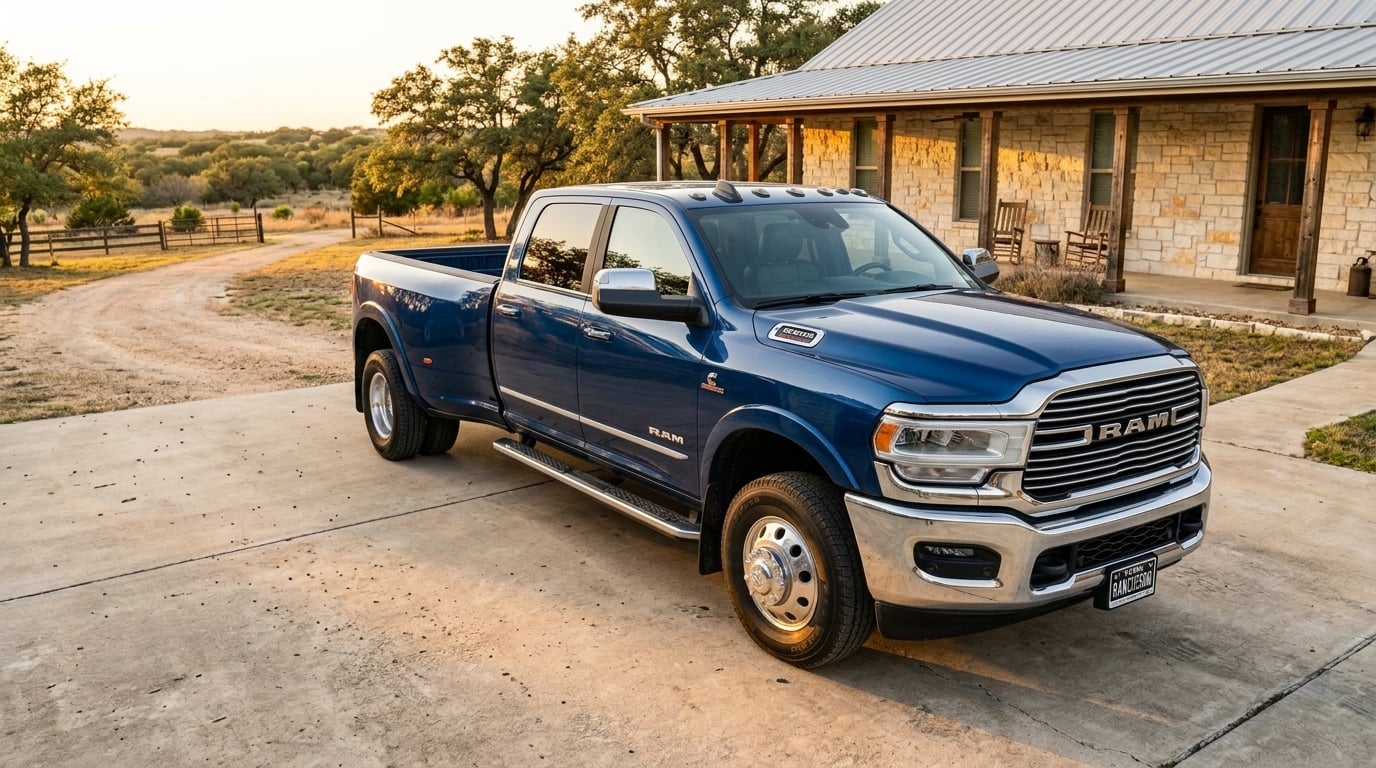
To reach the maximum towing capacity of 36,610 pounds on a Ram 3500, you must configure the truck with the 6.7L High-Output Cummins turbo-diesel engine, dual rear wheels, a 4.10 rear axle ratio, the factory Max Tow Package, and a factory fifth-wheel or gooseneck hitch prep package. Standard bumper hitches and single-rear-wheel configurations fall well short of this peak rating.
The 6.7L High-Output Cummins turbo-diesel engine generates 1,075 lb-ft of torque, providing the raw pulling force needed for heavy commercial loads. Torque alone cannot transfer that weight down the road safely. Dual rear wheels stabilize severe tongue weights and side-wind loads while distributing payload across four rear tires. The 4.10 rear axle ratio delivers the mechanical leverage required to launch heavy trailers on steep inclines without straining the TorqueFlite HD 8-speed automatic transmission.
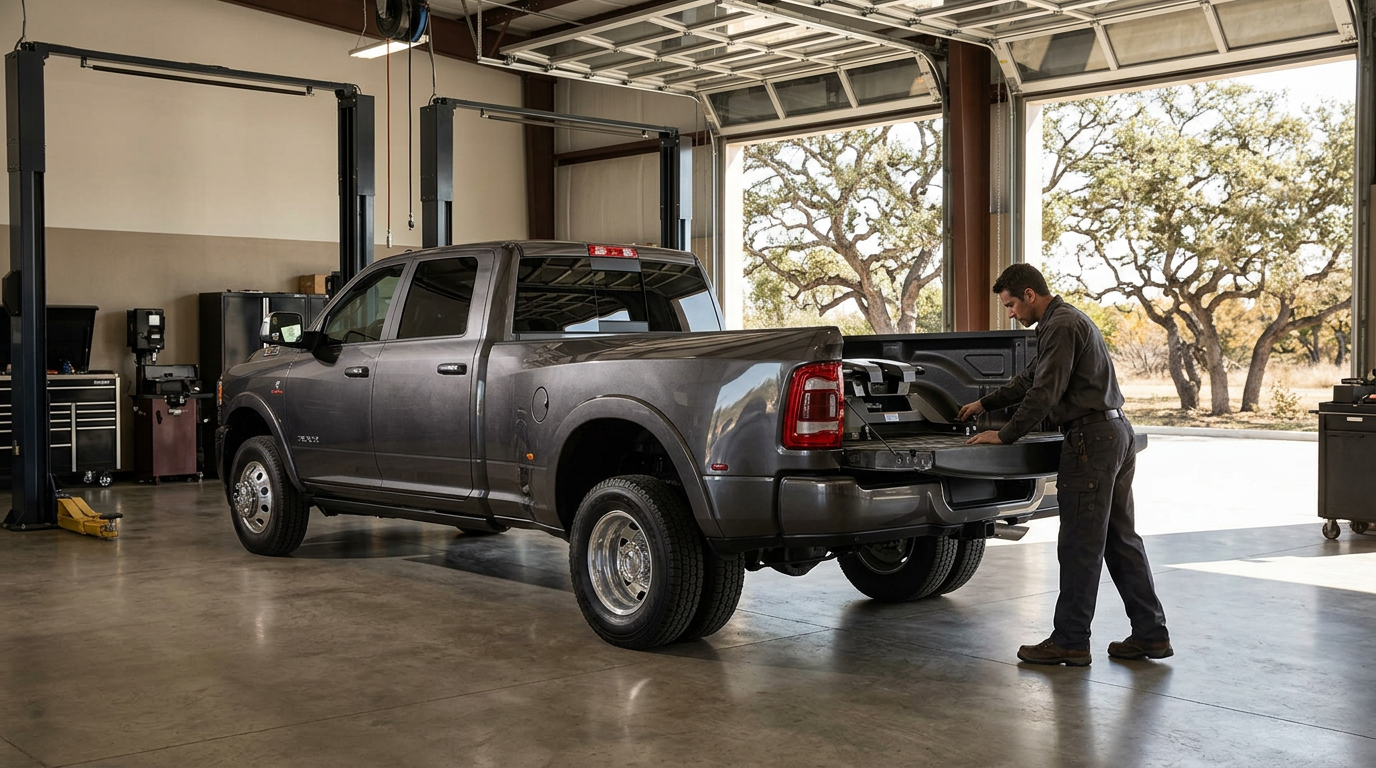
Factory fifth-wheel or gooseneck hitch prep provides structural cross-members welded directly to the frame, transferring heavy trailer pin weights over the rear axle. Using a conventional bumper receiver limits towing to significantly lower thresholds. When local ranch owners and heavy equipment operators drop by our Pleasanton service center location, we inspect hitch structures, fifth-wheel mounting rails, and wiring harnesses to ensure every component meets factory safety specs. If you ever have questions about tongue weights or cooling requirements before hauling heavy livestock trailers across open South Texas farmland, give our shop a quick call to speak with a diesel technician.
Table of Contents
- What Are the Signs of Transmission Slip on a Ram Heavy-Duty Truck?
- What Engine Options Are Offered in the Ram Heavy Duty Lineup?
- What Are the Symptoms of a Failing EGR Valve in a Ram 6.7L Cummins Diesel?
- What Maintenance Tasks Can Ram HD Owners Perform Themselves Versus Dealer Service?
- How Much Does Routine Maintenance Cost Annually for a Ram 2500 Diesel Truck?
- What Diesel Maintenance and Repair Needs Does Our Pleasanton Service Center See Most?
What Are the Signs of Transmission Slip on a Ram Heavy-Duty Truck?
Transmission slip on a Ram heavy-duty truck typically shows up as sudden engine RPM flares without an increase in vehicle speed, delayed gear engagement when shifting into drive or reverse, harsh downshifts under load, or elevated transmission fluid temperatures on the instrument cluster. Ignoring these early warning signs often leads to severe thermal damage across internal friction clutch packs.
When hauling heavy payloads, a slipping transmission loses hydraulic pressure or clutch friction, allowing planetary gear sets to spin out of sync with engine crankshaft speed. You might notice the tachometer needle jump 300 to 500 RPM while pulling an incline on the highway, accompanied by a brief loss of forward momentum. Diagnostic trouble codes related to gear ratio mismatches or solenoid circuit faults usually trigger a check engine light or dedicated transmission warning indicator on the dashboard.
In our service bay, technicians diagnose slipping by checking fluid condition, line pressure, and electronic solenoid actuation. Dark, burnt-smelling transmission fluid indicates friction material breakdown caused by excessive heat. Catching fluid breakdown early allows our team to service filters, flush fluid, and replace worn solenoids before catastrophic mechanical failure occurs. For fleet operators maintaining commercial workhorses, reviewing our commercial Ram vehicle options or inspecting our latest new Ram lineup provides insight into current heavy-duty cooling and transmission options engineered for demanding work environments.
What Engine Options Are Offered in the Ram Heavy Duty Lineup?
The Ram Heavy Duty lineup features two primary engines: the standard 6.4L HEMI V8 gas engine delivering 405 horsepower and 429 lb-ft of torque, and the optional 6.7L High-Output Cummins turbo-diesel inline-six producing 430 horsepower and 1,075 lb-ft of torque. Both powertrains pair with heavy-duty eight-speed automatic transmissions designed for high-stress towing.
The standard 6.4L HEMI V8 gas engine pairs with the TorqueFlite 8HP75-LCV 8-speed automatic transmission. This combination suits drivers who need substantial payload capability—up to 7,590 pounds on a properly equipped Ram 3500—and towing capacity up to 18,150 pounds, without the maintenance requirements of a diesel exhaust fluid system. Variable valve timing and cylinder deactivation help balance heavy-work output with operational efficiency during unladen highway driving.
For maximum pulling capability, the 6.7L High-Output Cummins turbo-diesel inline-six utilizes a cast-iron block, forged steel connecting rods, and a variable-geometry turbocharger. Mated to the robust TorqueFlite HD 8-speed automatic transmission, this diesel powertrain enables a Ram 2500 to tow up to 20,000 pounds and a Ram 3500 to pull up to 36,610 pounds. Commuters and property owners traversing the rolling hills around Boerne often prefer the Cummins diesel for its low-end grunt when climbing steep grades with horse trailers. Drivers evaluating pre-owned haulers can explore our pre-owned Ram truck selection to compare past model-year engine configurations and maintenance histories.
What Are the Symptoms of a Failing EGR Valve in a Ram 6.7L Cummins Diesel?
Symptoms of a failing Exhaust Gas Recirculation (EGR) valve on a Ram 6.7L Cummins diesel include engine hesitation during acceleration, reduced fuel economy, excessive soot buildup in the exhaust, engine knocking, and an illuminated check engine light with diagnostic codes such as P0401 or P0404.
The EGR valve recirculates a controlled portion of exhaust gas back into the intake manifold to lower combustion temperatures and reduce nitrogen oxide emissions. Over time, diesel exhaust soot and oil vapor combine to form heavy carbon deposits inside the valve body. When carbon buildup causes the EGR valve to stick open, inert exhaust gas continuously enters the combustion chamber, starving the engine of clean oxygen and causing rough idling or stalling.
An EGR valve stuck in the closed position increases combustion temperatures, which elevates nitrogen oxide emissions and triggers computer fault codes. Technicians inspect the valve assembly, clean carbon accumulation from internal passages, and test electronic position sensors. Replacing a clogged EGR valve and inspecting the accompanying EGR cooler restores throttle response and prevents carbon particles from damaging downstream diesel particulate filters.
What Maintenance Tasks Can Ram HD Owners Perform Themselves Versus Dealer Service?
Ram heavy-duty truck owners can easily perform basic maintenance tasks like replacing engine and cabin air filters, topping off Diesel Exhaust Fluid (DEF), replacing wiper blades, and checking tire pressures. Advanced services like transmission fluid flushes, fuel system diagnostics, suspension alignments, and diesel particulate filter cleanings require specialized dealer tools and factory software.
Replacing the engine air filter every 15,000 miles takes only a few minutes with simple hand tools and protects turbocharger compressor wheels from dust ingestion. Checking and topping off DEF at every fuel fill-up or oil change is equally straightforward, requiring basic care to avoid spilling fluid on paint or electrical connectors. Simple oil changes on gas V8 models are doable at home, provided you have a drain pan large enough for the oil volume and dispose of used oil responsibly.
Complex driveline and diesel maintenance tasks demand specialized equipment. Servicing dual fuel filters on a 6.7L Cummins requires precise priming procedures using diagnostic commands to prevent high-pressure fuel pump cavitation. Electronic module flashing, front-end steering alignments using computerized alignment racks, and factory diagnostic scans for active safety sensors must be performed by certified technicians to preserve factory warranty integrity and vehicle safety.
How Much Does Routine Maintenance Cost Annually for a Ram 2500 Diesel Truck?
Annual routine maintenance for a Ram 2500 diesel truck typically averages between $1,000 and $1,800 under normal operating conditions, driven primarily by large synthetic oil capacities, dual fuel filter replacements every 15,000 miles, DEF refills, and heavy-duty brake inspections.
The 6.7L Cummins engine holds 12 quarts of heavy-duty synthetic motor oil, making oil and filter service more expensive than a standard gasoline light truck. Fuel filtration is another essential annual maintenance item: replacing both the under-hood primary filter and chassis-mounted fuel/water separator every 15,000 miles or 12 months is mandatory to safeguard high-pressure fuel injectors operating above 29,000 psi.
Additional maintenance expenses across a typical 20,000-mile driving year include DEF top-offs, tire rotations every 8,000 miles to manage heavy front-axle engine weight, differential fluid inspections, and transfer case fluid changes on 4x4 models. While routine diesel maintenance costs more upfront than gas engine care, sticking strictly to factory service intervals prevents multi-thousand-dollar repairs on fuel pumps, turbochargers, and emissions components over the life of the truck.
What Diesel Maintenance and Repair Needs Does Our Pleasanton Service Center See Most?
Our service center most frequently identifies soot-clogged EGR valves, saturated Diesel Particulate Filters (DPF), steering link wear causing front-end play, and torque converter lockup wear on heavy-duty diesel trucks.
Frequent short trips and prolonged idling prevent diesel exhaust systems from reaching the temperatures required for passive DPF regeneration, causing soot buildup that requires active shop regeneration or manual cleaning. In the steering and suspension department, heavy diesel front-end weight subjects ball joints, track bars, and drag links to substantial stress over unpaved ranch roads, requiring periodic component replacement and wheel alignments to eliminate steering play.
Regular preventative maintenance stops these common wear items from turning into costly breakdowns. Drivers ready to maintain their vehicle's performance can stop by our convenient dealership location, give our service team a quick phone call, or schedule an oil change online today.
© 2026 Allways Atascosa CDJR. All rights reserved.