



Allways Atascosa Dodge Chrysler Jeep Ram

Blog / Maintenance & Service

Cummins 6.7L Diesel Maintenance Guide: Expert Q&A with Jesse Padilla

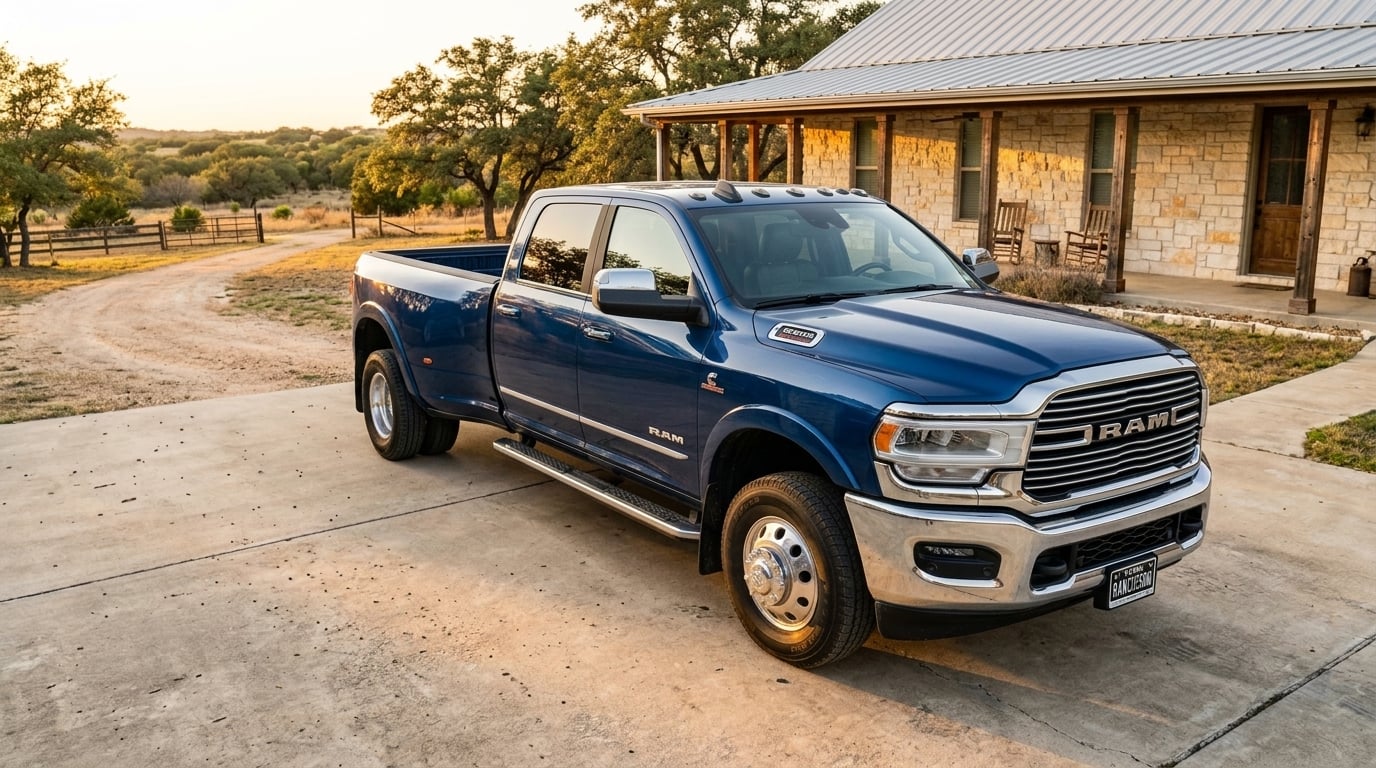
Blue Ram 3500 dually pickup truck parked on a concrete driveway in front of a stone ranch house at sunset.

To service a 6.7L Cummins Turbo Diesel engine properly, you need 12 quarts of API CK-4 certified engine oil, a fresh OEM-quality oil filter, a 15/16-inch socket for the drain plug, a heavy-duty oil filter wrench, a drain pan holding at least 15 quarts, clean shop rags, and protective gloves. We sat down with Jesse Padilla, Service Manager at Allways Atascosa CDJR, who brings 20 years of hands-on diesel experience to walk truck owners through proper maintenance for their heavy-duty rigs.

Q: What tools and supplies are required to perform an oil change on a Cummins 6.7L diesel?

A: Servicing the 6.7L Cummins Turbo Diesel requires 12 quarts (3 gallons) of approved engine oil, a Mopar or Cummins-approved replacement filter, a 15/16-inch socket or box wrench for the oil pan drain plug, a filter wrench capable of gripping a heavy-duty canister, a large drain pan rated for at least 15 quarts, clean funnels, shop towels, and nitrile gloves. Having every item prepared ahead of time prevents messy overflows and ensures the drain process goes smoothly from start to finish.

Choosing the proper lubricant formulation is critical for long-term engine protection. Running an oil that meets API CK-4 and Cummins CES 20086 specifications, such as 15W-40 conventional or 5W-40 synthetic, shields internal bearings and valvetrain components against extreme heat and soot accumulation. When truck owners prefer to let factory-trained technicians handle fluid service and waste disposal, you can easily book your diesel oil change or swing by our dedicated express lane for prompt turnaround. Certified mechanics make sure the drain plug washer is intact and torque everything to factory specifications.

Truck owners looking for replacement filters or clarification on crankcase capacity for a specific model year can check with our online service scheduling portal or give our service department a quick call at (830) 281-2244. Drivers traveling along major South Texas highway corridors can easily reach our service center location on Interstate 37 North for genuine Mopar parts and professional maintenance support.

A: Under standard highway operating conditions, Ram recommends changing the engine oil and oil filter on a 2026 Ram 2500 Heavy Duty equipped with the 6.7L Cummins Turbo Diesel every 15,000 miles, 12 months, or 500 engine hours, whichever occurs first. The factory oil life monitoring system tracks driving habits, idle time, and operating temperatures, signaling the driver when service is required.

Severe operating conditions alter fluid life significantly. Heavy payload hauling, continuous trailer towing, extended idling, or driving through dusty environments will cause the onboard monitor to request service earlier, often between 4,000 and 10,000 miles. Truck owners pulling loaded horse trailers or equipment across steep Hill Country grades around Boerne put elevated thermal stress on the oil, which accelerates oxidation. Using premium 5W-40 synthetic oil provides enhanced cold-start flow and high-temperature thermal breakdown resistance during demanding summer hauls.

Keeping up with strict fluid schedules protects vital commercial equipment and preserves factory warranty coverage. Commercial operators maintaining a fleet can browse our commercial truck inventory to see the latest heavy-duty options, while consulting our experienced service staff regarding custom fleet maintenance schedules. Additionally, checking factory service offers and incentives helps owners manage routine maintenance budgets effectively throughout the year.

Q: How often should fuel filters and engine air filters be replaced on the 6.7L Cummins Diesel?

A: Dual fuel filter replacement on the 6.7L Cummins Turbo Diesel must occur every 15,000 miles, 12 months, or 500 operating hours, while the engine air filter requires inspection at every oil change and replacement at least every 20,000 miles or as indicated by the air restriction gauge. Modern high-pressure common rail fuel systems operate at pressures exceeding 29,000 psi, making clean fuel delivery essential for protecting delicate fuel injectors and the high-pressure injection pump.

"Replacing both fuel filters together every 15,000 miles is one of the best ways to protect a high-pressure diesel injection system."

The engine utilizes two distinct fuel filters that work in tandem: an under-hood fuel filter element and a chassis-mounted fuel-water separator. Water or microscopic particulate contamination entering the high-pressure fuel pump can cause catastrophic component failure costing thousands of dollars to repair. Swapping both filters concurrently ensures uniform fuel flow and prevents premature pressure drops across the fuel rail.

Proper air filtration is equally important when operating heavy-duty trucks on unpaved roads or active job sites. Dust loading restricts airflow, causing higher exhaust gas temperatures and reduced turbocharger efficiency. Owners evaluating pre-owned heavy-duty Ram inventory should always verify that previous owners kept up with filter maintenance records. You can learn more about our commitment to vehicle longevity by visiting our dealership overview page or exploring current new vehicle specials for your next truck upgrade.

Q: Does Diesel Exhaust Fluid expire or go bad in hot Texas climates?

A: Diesel Exhaust Fluid (DEF) has a limited shelf life of approximately 12 to 24 months when stored between 12 and 86 degrees Fahrenheit, but sustained ambient temperatures above 90 degrees Fahrenheit reduce its usable life down to six months or less. DEF consists of 32.5 percent high-purity synthetic urea and 67.5 percent deionized water, making it sensitive to evaporation and thermal degradation.

When DEF degrades due to intense heat, water evaporates from the solution, disrupting the precise urea concentration required by the Selective Catalytic Reduction (SCR) system. Using degraded fluid can lead to crystalline deposits inside the DEF injector, incorrect dosing, and illumination of the check engine light accompanied by speed-limitation warnings. Drivers should check their DEF tank level at every 7,500-mile mark and avoid storing extra DEF jugs in hot truck beds or unconditioned garages during peak summer months.

Truck owners who notice warning lights related to emissions or DEF quality can bring their vehicle to our factory-certified service center for rapid diagnostic scanning. Drivers cross-shopping pre-owned vehicle options can evaluate ownership costs with our online buying power estimator, or explore our latest new Ram truck inventory featuring advanced emissions controls and covered maintenance benefits.

Q: What is the overall routine maintenance schedule for long-term Cummins diesel reliability?

A: Comprehensive long-term maintenance for a 6.7L Cummins Turbo Diesel involves changing engine oil and dual fuel filters every 15,000 miles, replacing the cabin air filter every 12,000 miles, inspecting drive belts at 60,000 miles, and performing a complete cooling system flush at 100,000 miles or 60 months. Adhering to this structured cadence prevents premature wear on turbochargers, EGR valves, and internal engine bearings.

Truck owners driving a 2026 Ram 3500 Heavy Duty or 2026 Ram Chassis Cab Diesel in severe commercial applications should also monitor the crankcase ventilation (CCV) filter. A clogged CCV filter causes crankcase pressure buildup, which can force oil past turbocharger seals or main crankshaft seals. Checking valve lash adjustments at 150,000 miles ensures optimal intake and exhaust valve clearance, maintaining peak engine compression and fuel economy.

Routine attention to differential fluids and transmission service is equally vital when hauling heavy loads. Fleet operators benefit from enrolling in our Allways Appreciating You program to receive priority maintenance scheduling. Commercial drivers can also complete an online prequalification application when expanding their fleet, or partner with our BusinessLink commercial support program for dedicated service perks and expedited bay access.

Q: What should truck owners look for in a local Pleasanton service center for Cummins diesel care?

A: Truck owners evaluating local service centers for a Cummins engine should look for factory-trained technicians, OEM diagnostic equipment like Chrysler wiTECH systems, genuine Mopar and Cummins replacement parts, and dedicated commercial service facilities. Diesel engines require specialized pressure gauges, scan tools, and technical expertise that generic repair shops often lack.

Work trucks navigating the open farmland and ranching acreage surrounding Pleasanton face constant dust exposure and demanding towing demands. Having local technicians who understand South Texas working conditions ensures your truck receives the exact oil viscosities, filter grades, and severe-duty service intervals required to stay dependable season after season. Certified technicians inspect critical components like turbocharger actuator linkage and EGR coolers during routine service visits to catch minor issues before they cause jobsite downtime.

Our service department provides complete heavy-duty support backed by master technicians who specialize in Ram trucks. You can navigate directly to our convenient Pleasanton service location or contact our service team at (830) 281-2244 to discuss your truck's maintenance needs. Be sure to browse our current service and parts information before your next appointment to save on genuine oil changes, filter kits, and routine maintenance items.


© 2026 Allways Atascosa CDJR. All rights reserved.

Posted in:

Related Posts

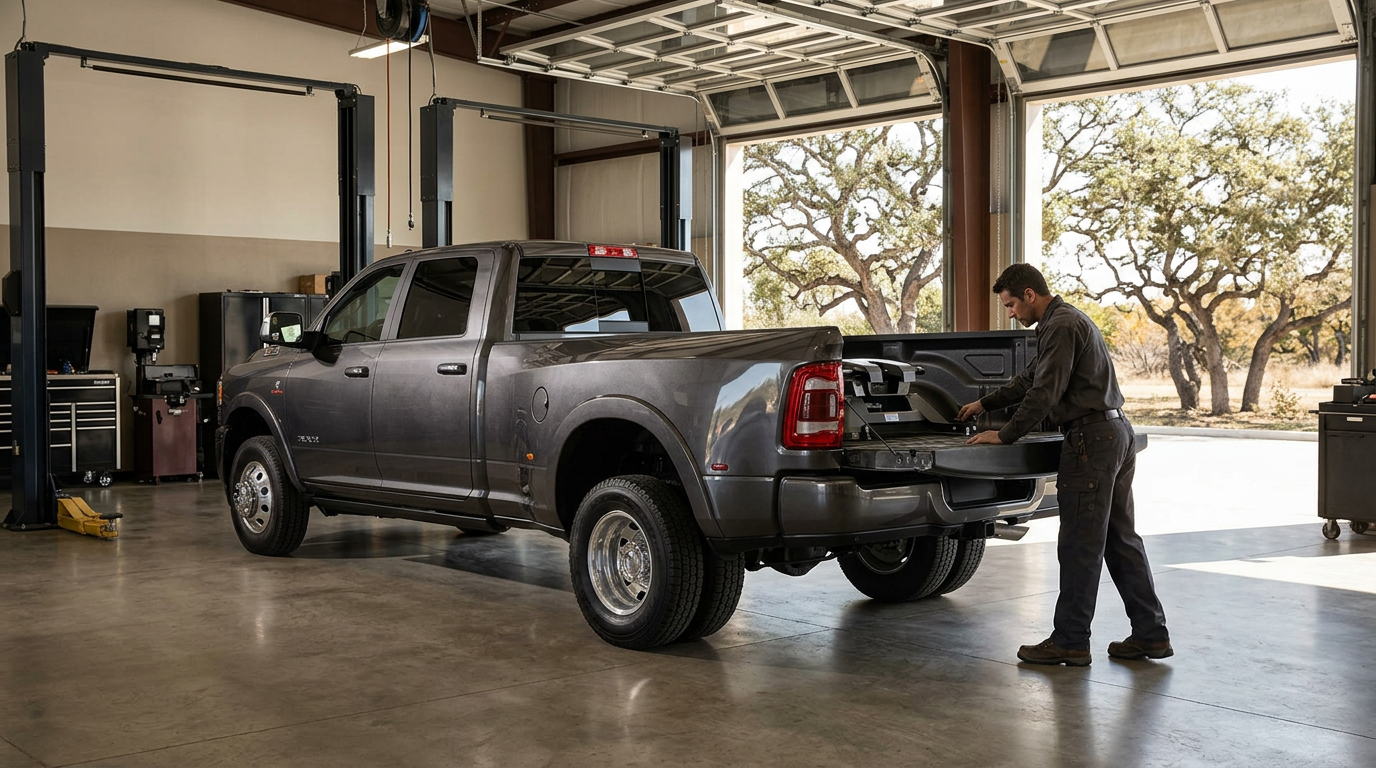
A mechanic servicing a grey Ram dually pickup truck inside a garage bay with an open tailgate. (Representative image for illustration purposes only. Actual vehicle may vary based on trim and configuration.)

Ram Truck Repair in Pleasanton: What Our Technicians See Most on Heavy-Duty Trucks

What Equipment Is Required to Reach Maximum Towing Capacity on a Ram 3500? To reach the maximum towing capacity of 36,610 pounds on a Ram 3500, you must configure the truck with the 6.7L High-Output Cummins turbo-diesel engine, dual rear wheels, a 4.10 rear axle ratio, the factory Max Tow Package, and a factory fifth-wheel or gooseneck hitch prep package. Standard bumper hitches and single-rear-wheel configurations fall well short of this peak rating. The 6.7L High-Output Cummins turbo-diesel engine generates 1,075 lb-ft of torque, providing the raw pulling force needed for heavy commercial loads. Torque alone cannot transfer that weight down the road safely. Dual rear wheels stabilize severe tongue weights and side-wind loads while distributing payload across four rear tires. The 4.10 rear axle ratio delivers the mechanical leverage required to launch heavy trailers on steep inclines without straining the TorqueFlite HD 8-speed automatic transmission. Factory fifth-wheel or gooseneck hitch prep provides structural cross-members welded directly to the frame, transferring heavy trailer pin weights over the rear axle. Using a conventional bumper receiver limits towing to significantly lower thresholds. When local ranch owners and heavy equipment operators drop by our Pleasanton service center location, we inspect hitch structures, fifth-wheel mounting rails, and wiring harnesses to ensure every component meets factory safety specs. If you ever have questions about tongue weights or cooling requirements before hauling heavy livestock trailers across open South Texas farmland, give our shop a quick call to speak with a diesel technician. Table of Contents What Are the Signs of Transmission Slip on a Ram Heavy-Duty Truck? What Engine Options Are Offered in the Ram Heavy Duty Lineup? What Are the Symptoms of a Failing EGR Valve in a Ram 6.7L Cummins Diesel? What Maintenance Tasks Can Ram HD Owners Perform Themselves Versus Dealer Service? How Much Does Routine Maintenance Cost Annually for a Ram 2500 Diesel Truck? What Diesel Maintenance and Repair Needs Does Our Pleasanton Service Center See Most? What Are the Signs of Transmission Slip on a Ram Heavy-Duty Truck? Transmission slip on a Ram heavy-duty truck typically shows up as sudden engine RPM flares without an increase in vehicle speed, delayed gear engagement when shifting into drive or reverse, harsh downshifts under load, or elevated transmission fluid temperatures on the instrument cluster. Ignoring these early warning signs often leads to severe thermal damage across internal friction clutch packs. When hauling heavy payloads, a slipping transmission loses hydraulic pressure or clutch friction, allowing planetary gear sets to spin out of sync with engine crankshaft speed. You might notice the tachometer needle jump 300 to 500 RPM while pulling an incline on the highway, accompanied by a brief loss of forward momentum. Diagnostic trouble codes related to gear ratio mismatches or solenoid circuit faults usually trigger a check engine light or dedicated transmission warning indicator on the dashboard. In our service bay, technicians diagnose slipping by checking fluid condition, line pressure, and electronic solenoid actuation. Dark, burnt-smelling transmission fluid indicates friction material breakdown caused by excessive heat. Catching fluid breakdown early allows our team to service filters, flush fluid, and replace worn solenoids before catastrophic mechanical failure occurs. For fleet operators maintaining commercial workhorses, reviewing our commercial Ram vehicle options or inspecting our latest new Ram lineup provides insight into current heavy-duty cooling and transmission options engineered for demanding work environments. What Engine Options Are Offered in the Ram Heavy Duty Lineup? The Ram Heavy Duty lineup features two primary engines: the standard 6.4L HEMI V8 gas engine delivering 405 horsepower and 429 lb-ft of torque, and the optional 6.7L High-Output Cummins turbo-diesel inline-six producing 430 horsepower and 1,075 lb-ft of torque. Both powertrains pair with heavy-duty eight-speed automatic transmissions designed for high-stress towing. The standard 6.4L HEMI V8 gas engine pairs with the TorqueFlite 8HP75-LCV 8-speed automatic transmission. This combination suits drivers who need substantial payload capability—up to 7,590 pounds on a properly equipped Ram 3500—and towing capacity up to 18,150 pounds, without the maintenance requirements of a diesel exhaust fluid system. Variable valve timing and cylinder deactivation help balance heavy-work output with operational efficiency during unladen highway driving. For maximum pulling capability, the 6.7L High-Output Cummins turbo-diesel inline-six utilizes a cast-iron block, forged steel connecting rods, and a variable-geometry turbocharger. Mated to the robust TorqueFlite HD 8-speed automatic transmission, this diesel powertrain enables a Ram 2500 to tow up to 20,000 pounds and a Ram 3500 to pull up to 36,610 pounds. Commuters and property owners traversing the rolling hills around Boerne often prefer the Cummins diesel for its low-end grunt when climbing steep grades with horse trailers. Drivers evaluating pre-owned haulers can explore our pre-owned Ram truck selection to compare past model-year engine configurations and maintenance histories. What Are the Symptoms of a Failing EGR Valve in a Ram 6.7L Cummins Diesel? Symptoms of a failing Exhaust Gas Recirculation (EGR) valve on a Ram 6.7L Cummins diesel include engine hesitation during acceleration, reduced fuel economy, excessive soot buildup in the exhaust, engine knocking, and an illuminated check engine light with diagnostic codes such as P0401 or P0404. The EGR valve recirculates a controlled portion of exhaust gas back into the intake manifold to lower combustion temperatures and reduce nitrogen oxide emissions. Over time, diesel exhaust soot and oil vapor combine to form heavy carbon deposits inside the valve body. When carbon buildup causes the EGR valve to stick open, inert exhaust gas continuously enters the combustion chamber, starving the engine of clean oxygen and causing rough idling or stalling. An EGR valve stuck in the closed position increases combustion temperatures, which elevates nitrogen oxide emissions and triggers computer fault codes. Technicians inspect the valve assembly, clean carbon accumulation from internal passages, and test electronic position sensors. Replacing a clogged EGR valve and inspecting the accompanying EGR cooler restores throttle response and prevents carbon particles from damaging downstream diesel particulate filters. What Maintenance Tasks Can Ram HD Owners Perform Themselves Versus Dealer Service? Ram heavy-duty truck owners can easily perform basic maintenance tasks like replacing engine and cabin air filters, topping off Diesel Exhaust Fluid (DEF), replacing wiper blades, and checking tire pressures. Advanced services like transmission fluid flushes, fuel system diagnostics, suspension alignments, and diesel particulate filter cleanings require specialized dealer tools and factory software. Replacing the engine air filter every 15,000 miles takes only a few minutes with simple hand tools and protects turbocharger compressor wheels from dust ingestion. Checking and topping off DEF at every fuel fill-up or oil change is equally straightforward, requiring basic care to avoid spilling fluid on paint or electrical connectors. Simple oil changes on gas V8 models are doable at home, provided you have a drain pan large enough for the oil volume and dispose of used oil responsibly. Complex driveline and diesel maintenance tasks demand specialized equipment. Servicing dual fuel filters on a 6.7L Cummins requires precise priming procedures using diagnostic commands to prevent high-pressure fuel pump cavitation. Electronic module flashing, front-end steering alignments using computerized alignment racks, and factory diagnostic scans for active safety sensors must be performed by certified technicians to preserve factory warranty integrity and vehicle safety. How Much Does Routine Maintenance Cost Annually for a Ram 2500 Diesel Truck? Annual routine maintenance for a Ram 2500 diesel truck typically averages between $1,000 and $1,800 under normal operating conditions, driven primarily by large synthetic oil capacities, dual fuel filter replacements every 15,000 miles, DEF refills, and heavy-duty brake inspections. The 6.7L Cummins engine holds 12 quarts of heavy-duty synthetic motor oil, making oil and filter service more expensive than a standard gasoline light truck. Fuel filtration is another essential annual maintenance item: replacing both the under-hood primary filter and chassis-mounted fuel/water separator every 15,000 miles or 12 months is mandatory to safeguard high-pressure fuel injectors operating above 29,000 psi. Additional maintenance expenses across a typical 20,000-mile driving year include DEF top-offs, tire rotations every 8,000 miles to manage heavy front-axle engine weight, differential fluid inspections, and transfer case fluid changes on 4x4 models. While routine diesel maintenance costs more upfront than gas engine care, sticking strictly to factory service intervals prevents multi-thousand-dollar repairs on fuel pumps, turbochargers, and emissions components over the life of the truck. What Diesel Maintenance and Repair Needs Does Our Pleasanton Service Center See Most? Our service center most frequently identifies soot-clogged EGR valves, saturated Diesel Particulate Filters (DPF), steering link wear causing front-end play, and torque converter lockup wear on heavy-duty diesel trucks. Frequent short trips and prolonged idling prevent diesel exhaust systems from reaching the temperatures required for passive DPF regeneration, causing soot buildup that requires active shop regeneration or manual cleaning. In the steering and suspension department, heavy diesel front-end weight subjects ball joints, track bars, and drag links to substantial stress over unpaved ranch roads, requiring periodic component replacement and wheel alignments to eliminate steering play. Regular preventative maintenance stops these common wear items from turning into costly breakdowns. Drivers ready to maintain their vehicle's performance can stop by our convenient dealership location, give our service team a quick phone call, or schedule an oil change online today. © 2026 Allways Atascosa CDJR. All rights reserved.

White Jeep Wrangler driving near mountains in Pleasanton, TX

Best Used Jeep to Buy: Top Models to Consider

Are you shopping for a used SUV that can handle everyday driving but also take you off the beaten path? Jeep has several models worth considering, depending on what you need from your next vehicle. From the trail-ready Jeep Wrangler to the comfortable Grand Cherokee, different Jeep models offer different combinations of performance, four-wheel-drive capability, passenger space, and technology. Shopping pre-owned also gives you the opportunity to compare multiple model years, trim levels, and equipment packages at different price points. Whether you need an SUV for commuting around San Antonio, taking family road trips, or exploring South Texas, here's a closer look at some of the best used Jeep models to consider. What Makes a Used Jeep Worth Buying? The best used Jeep depends on how you plan to use your vehicle. Some models prioritize off-road capability, while others offer more passenger space and everyday comfort. When comparing pre-owned Jeeps, consider the available 4x4 system, engine, trim level, mileage, and maintenance history. Equipment can vary significantly between model years, even within the same trim. Jeep Wrangler: Best Used Jeep for Off-Road Adventures If off-road capability is your priority, the Jeep Wrangler is one of the best used Jeep models to consider. Its solid front and rear axles, available four-wheel-drive systems, and removable doors and tops make it particularly well suited for trail driving. The JK generation (2007-2018) offers a traditional Wrangler design, with 2012-2018 models featuring the 3.6L Pentastar V6. The JL generation (2018-present) introduced updated technology and additional powertrain options, including a 2.0L turbocharged engine and the 4xe plug-in hybrid. Trim levels also make a difference. The Rubicon offers specialized off-road equipment, including available locking differentials and an electronic sway bar disconnect, while the Sport and Willys provide other combinations of features and capability. Jeep Grand Cherokee: Best Used Jeep for Everyday Comfort The Jeep Grand Cherokee is a great option for shoppers who want available four-wheel drive alongside a comfortable interior and everyday versatility. The WK2 generation (2011-2021) offers engine options such as the 3.6L Pentastar V6 and available 5.7L HEMI V8. The newer WL generation, introduced for 2022, brought updated technology, interior features, and the Grand Cherokee L with three rows of seating. Depending on the year and trim, used Grand Cherokee models may include leather seating, Uconnect infotainment, available air suspension, and Quadra-Trac or Quadra-Drive 4x4 systems. Jeep Cherokee: Best Used Jeep for Compact SUV Versatility For drivers who want a smaller SUV, the Jeep Cherokee offers a practical combination of everyday comfort and available four-wheel drive. The KL generation (2014-2023) offered several engine options, including a 2.4L four-cylinder, 3.2L Pentastar V6, and available 2.0L turbocharged four-cylinder. The Trailhawk trim is particularly worth considering for its additional off-road equipment, including available skid plates, increased ground clearance, and specialized 4x4 features. Jeep Compass: Best Used Jeep for City and Everyday Driving The Jeep Compass is another good option for shoppers looking for a compact SUV with available four-wheel drive. Its smaller footprint makes it convenient for commuting, parking, and navigating busy streets while still offering useful passenger and cargo space. The second-generation Compass, introduced for the 2017 model year, brought updated styling, interior technology, and available 4x4 systems. Depending on the model year, shoppers may find features such as a Uconnect touchscreen, Apple CarPlay, Android Auto, and available Jeep Active Drive or Active Drive Low 4x4 systems. The Trailhawk trim is worth comparing if you want additional off-road equipment, including increased ground clearance, underbody protection, and specialized Selec-Terrain settings. Which Used Jeep Is Right for You? The best used Jeep ultimately depends on your driving needs and priorities. Here's a quick comparison: Jeep Wrangler: Best for off-road driving, removable doors and tops, and traditional Jeep styling. Jeep Grand Cherokee: Best for families and commuters who want additional comfort, available three-row seating, and 4x4 capability. Jeep Cherokee: Best for shoppers looking for a smaller SUV with available four-wheel drive and additional engine options. Jeep Compass: Best for everyday driving, compact SUV convenience, and available 4x4 capability. Compare model years, trim levels, engines, and available equipment before making your decision. These differences can have a significant impact on the features and capabilities of a pre-owned Jeep. Find the Best Used Jeep Near San Antonio, TX If you are searching for the best used Jeep near San Antonio, Allways Atascosa CDJR is here to help. Located in Pleasanton, our dealership gives South Texas shoppers another place to compare pre-owned Jeep models and find a vehicle that fits their needs. Whether you are interested in a used Wrangler for off-road adventures, a Grand Cherokee for everyday comfort, or a Compass for convenient daily driving, browse our pre-owned inventory to compare available vehicles, pricing, and features. Contact Allways Atascosa CDJR to learn more or schedule a test drive.

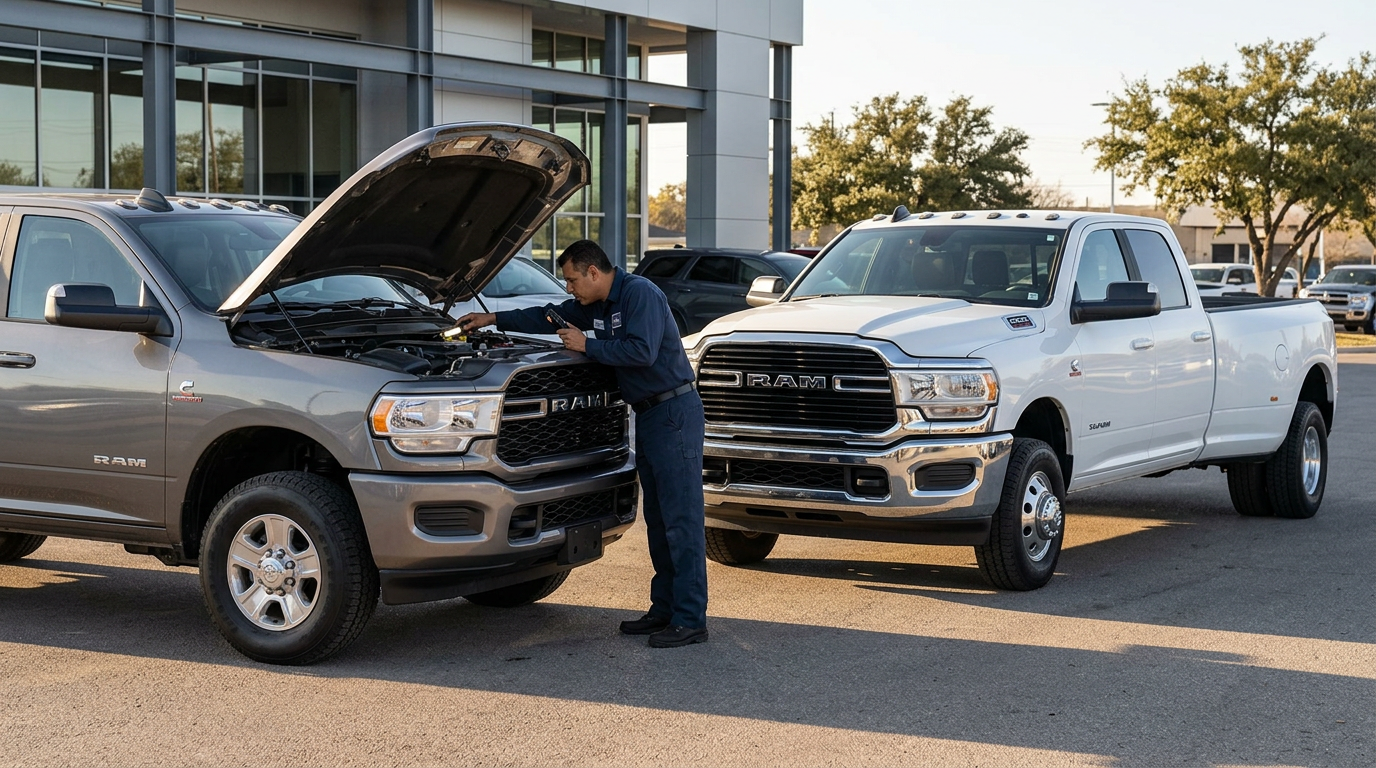
Mechanic inspecting the engine bay of a grey Ram pickup truck parked next to a white Ram dually outside a dealership. (Representative image for illustration purposes only. Actual vehicle may vary based on trim and configuration.)

Expert Buyer's Guide: What to Inspect Before Buying a Used Ram 2500 or 3500 Diesel

Hiring a certified diesel technician for a pre-purchase inspection on a pre-owned heavy-duty truck is essential because heavy commercial powertrains require specialized diagnostic equipment to evaluate cylinder balance, fuel injection pressures, turbocharger condition, and emissions system integrity before you commit to a purchase. Today, David McCumber, Sales Manager at Allways Atascosa CDJR with 25 years of automotive experience, shares expert insights on what heavy-duty buyers must evaluate before signing on the dotted line. Q: Should you hire a diesel mechanic for a pre-purchase inspection on a Ram 3500? A: Hiring a certified diesel technician for a comprehensive pre-purchase inspection on a pre-owned heavy-duty truck is one of the smartest investments a buyer can make. Modern turbodiesel powertrains operate under extreme cylinder pressures and thermal loads, so evaluating them requires specialized diagnostic scan tools capable of performing real-time cylinder balance tests, reading high-pressure fuel rail performance, and verifying exhaust backpressure metrics across the turbocharger system. A standard visual pass or simple test drive cannot reveal whether a high-pressure common-rail injector is dribbling fuel or whether the variable-geometry turbocharger nozzle is beginning to stick. Professional diesel technicians also inspect critical structural and electronic areas that general mechanics might overlook, including the condition of the dual-alternator charging circuit, body control module fault histories, and transmission fluid condition. Bringing in an expert ensures you receive a full diagnostic printout showing active and stored diagnostic trouble codes, complete exhaust system status, and detailed maintenance verification before making your purchase decision. If you ever want to arrange a detailed inspection or discuss heavy-duty inventory in person, you can visit our Pleasanton dealership location or give us a call directly at (830) 281-2244. Drivers cross-shopping across our vehicle lineup can also explore our new vehicle inventory to compare heavy-duty capabilities against versatile family SUVs. Q: What essential mechanical system checks are needed on a used Ram Cummins diesel? A: Beyond the engine block itself, a thorough mechanical evaluation must target the entire driveline, steering assembly, and cooling infrastructure. The 6.7L Cummins turbo diesel inline-six generates immense low-end torque, which puts significant force through the transmission, transfer case, and front drag-link steering geometry. On trucks equipped with the 68RFE six-speed automatic transmission or the heavy-duty 8-speed automatic, technicians check for delayed gear engagement, fluid discoloration, and line pressure irregularities, particularly between 3rd and 4th gear shifts under simulated towing loads. Front suspension and steering components warrant careful physical inspection. Heavy front axle weight can wear ball joints, track bar bushings, and tie-rod ends prematurely if the truck was regularly operated on unpaved agricultural land around Pleasanton or loaded down with heavy bumper-pull livestock trailers. Technicians check for play in the steering gear box and look for signs of fluid leaks around the hydro-boost brake assist unit and front axle shaft seals. Verifying complete service records is equally vital. Regular service intervals for the fuel filters and crankcase ventilation filter are critical to preserving fuel pump pressure and engine longevity. Browsing our curated CARFAX 1-owner pre-owned inventory provides buyers with documented maintenance histories, while hardworking business owners can review our specialized commercial vehicle inventory for work-ready heavy-duty trucks built for high-demand jobs. Q: How do you check a 6.7L Cummins Turbo Diesel engine for severe blow-by? A: Checking for excessive crankcase blow-by provides an immediate window into the health of the engine's piston rings and cylinder walls. To perform this check, bring the engine up to full operating temperature and leave it idling in park. Unscrew the oil filler cap on top of the valve cover, turn it upside down, and rest it loosely over the filler neck without threading it down. On a healthy inline-six engine with strong ring sealing, the inverted cap should rest steadily on the filler neck with minimal vibration or light vapor rising. If significant crankcase pressure or dense smoke pushes the oil cap off the valve cover or blows it out of place, that indicates combustion gases are escaping past worn piston rings into the crankcase, signaling severe engine wear or internal damage that requires major engine service. "A proper pre-purchase inspection on a high-output diesel doesn't just reveal past maintenance; it protects your investment for the next hundred thousand miles." When buyers visit our lot to inspect pre-owned trucks, our team encourages full transparency and complete mechanical evaluations on every vehicle. Through our Allways Appreciating You program, we stand behind our inventory with clear customer support and vehicle history documentation so buyers know exactly what capability they are adding to their driveway. Q: Are emission-deleted Ram diesel trucks legal to register and drive? A: Operating or registering a diesel truck with deleted emissions equipment violates federal law under the Clean Air Act and renders the vehicle non-compliant for state road operation. Modifying or removing the Diesel Particulate Filter, Selective Catalytic Reduction system, Exhaust Gas Recirculation valve, or diesel exhaust fluid system alters factory engine management software and causes the vehicle to fail state safety and environmental inspections. Beyond legal prohibitions, purchasing a deleted diesel truck creates major financial and operational risks. Tampered control modules often mask underlying mechanical issues, disable onboard safety diagnostics, and void remaining manufacturer warranty protection. Restoring a deleted exhaust system back to factory compliance using genuine OEM components can cost thousands of dollars in parts and labor. We strongly advise buyers to avoid modified or tampered trucks entirely. Every vehicle in our pre-owned Ram inventory retains its factory-certified emissions hardware and stock powertrain calibration, ensuring that your heavy-duty truck remains fully legal, reliable, and straightforward to service wherever your work takes you. Q: Does a Cummins diesel engine add resale value and reliability Over gas V8s? A: Equipping a heavy-duty truck with the inline-six turbodiesel provides significant advantages in resale value retention and long-term mechanical durability compared to standard gasoline engines. In the pre-owned market, heavy-duty trucks featuring the diesel powerplant routinely command a price premium of $6,000 to $10,000 over comparable gas-powered models such as those with the 6.4-liter Hemi V-8. This value retention stems directly from commercial market demand and the proven longevity of the inline engine architecture. The inline-six layout offers inherent design strengths for high-mileage heavy-duty use. Featuring a heavy-duty cast-iron block, single cylinder head, and fewer moving parts than traditional V8 engines, the inline configuration distributes thermal stress evenly and provides exceptional durability under continuous heavy loads. While gas V8 engines deliver strong acceleration for lighter daily hauling, the diesel engine excels when pulling continuous heavy loads up steep grade climbs across the Texas Hill Country near Boerne. When calculating total cost of ownership, the diesel engine's fuel efficiency under load and strong trade-in value often offset its higher initial purchase price. Drivers considering upgrading their current truck can utilize our online trade-in appraisal tool to discover how much equity they can apply toward a pre-owned heavy-duty pickup. Q: What is the maximum towing capacity of a used Ram 3500 High-Output Diesel? A: When properly configured with the available high-output 6.7-liter Cummins inline-six and a gooseneck hitch, the Ram 3500 dually achieves a maximum towing capacity of up to 36,610 pounds. This high-output iteration produces 430 horsepower and a staggering 1,075 lb-ft of torque, making it one of the most capable heavy-duty platforms available for hauling fifth-wheel trailers, commercial machinery, and heavy agricultural equipment. Achieving maximum tow ratings requires matching the specific truck configuration to the weight of your load. Maximum trailering figures depend on choosing the dual-rear-wheel setup, the 4.10 axle ratio, and the proper factory prep package. Single-rear-wheel Ram 2500 diesel models feature an impressive maximum tow rating of 20,000 pounds, offering excellent capability for enclosed cargo trailers and medium equipment loads while maintaining everyday driving comfort. Before signing a purchase agreement, buyers should always verify the Gross Vehicle Weight Rating and Gross Combined Weight Rating listed on the driver-side door jamb certification label. Matching your specific trailering needs with the exact axle ratio and bed configuration ensures safe and compliant towing on highway corridors and back roads alike. Q: How can you safely buy a pre-owned heavy-duty truck? A: Purchasing a pre-owned heavy-duty truck with confidence comes down to transparent vehicle histories, professional inspection standards, and working with a dealership that knows heavy-duty capability inside and out. Selecting a truck backed by comprehensive inspection reports and clean title verification eliminates guesswork and ensures that your vehicle is ready for demanding work duty from day one. Our sales and finance specialists work directly with you to match your towing requirements, payload expectations, and purchase priorities with the right truck. Whether you need a rugged work truck trim or a refined leather-appointed cabin for long highway trips, our team provides complete vehicle details and straightforward guidance throughout the buying process. When you are ready to explore our heavy-duty truck selection, stop by our dealership on Interstate Highway 37 North or call us at (830) 281-2244. You can also complete our convenient online credit application ahead of your visit to streamline your purchase and get behind the wheel of a dependable truck today. Keep Your Vehicle Running Strong Keep your vehicle performing at its best with our service team: Visit Our Express Lane Schedule Your Service Appointment Schedule Your Oil Change Today © 2026 Allways Atascosa CDJR. All rights reserved.