



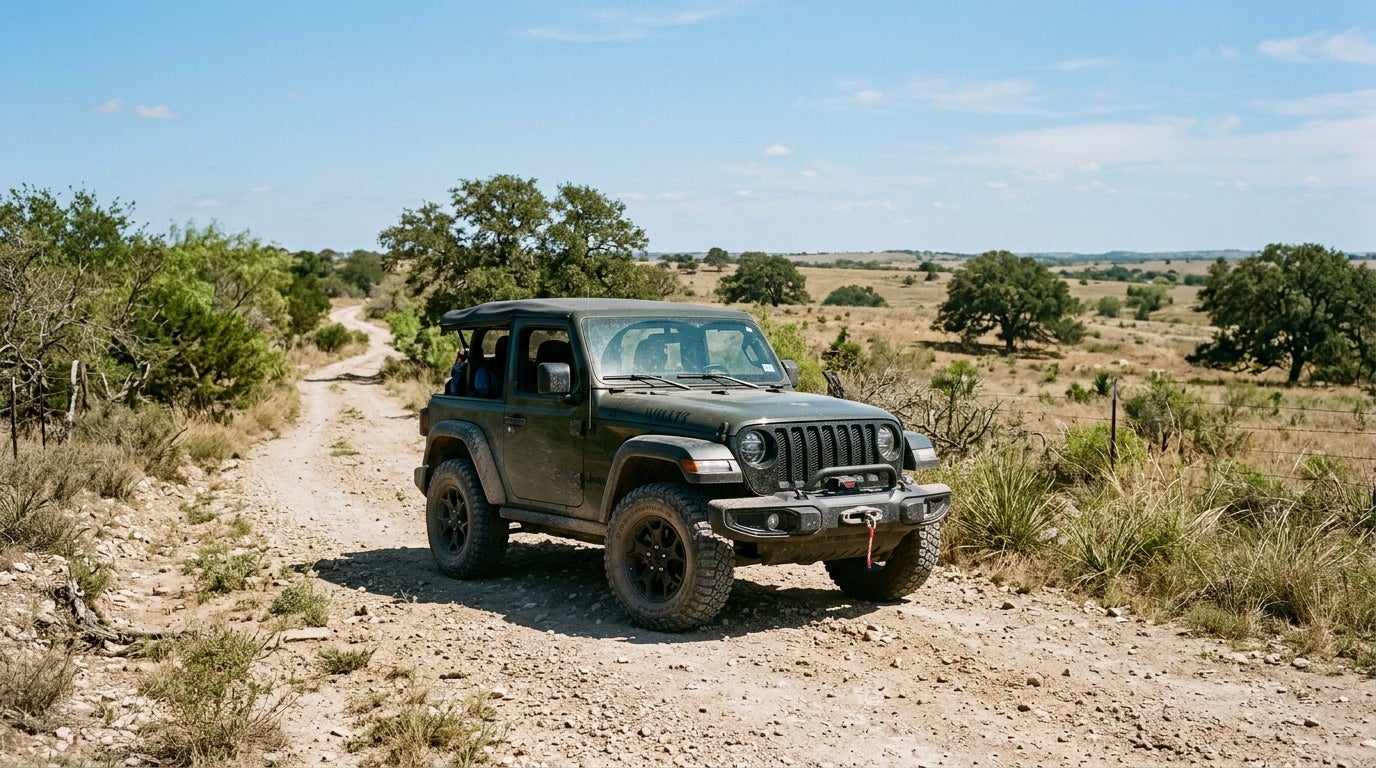
Under normal highway operation, Jeep Wrangler transmission fluid requires inspection every 30,000 miles, but severe usage like off-roading, heavy trailering, or extreme South Texas heat requires fluid and filter replacement every 60,000 miles. Addressing early warning signs—including delayed gear engagement, slipping between ratios, fluid leaks, or an illuminated transmission temperature warning light—prevents complete mechanical failure. We sat down with Jesse Padilla, Service Manager at Allways Atascosa CDJR, who brings 20 years of professional automotive experience to explain how proper maintenance keeps these iconic 4x4 vehicles performing reliably on and off the road.
Jeep Wrangler Transmission Service Intervals and Common Issue Warning Signs
Q: Jesse, why is proper transmission maintenance so critical for Wrangler owners, and what basic service schedule should they follow?
A: Jesse explains that Wrangler transmissions undergo significantly more mechanical strain than standard commuter vehicles due to four-wheel-drive demands, heavy payloads, and trail use. Under typical everyday driving, checking fluid clarity and levels every 30,000 miles keeps systems operating smoothly until a major service near 100,000 miles. However, driving across rough ranch terrain around Pleasanton or hauling equipment alters that timeline. Severe duty causes rapid fluid thermal degradation, making a complete fluid and filter replacement necessary at 60,000 miles. Owners can visit our service center location or schedule routine maintenance online to keep their driveline protected.
Table of Contents
- What Transmissions Are Available in the 2024 Jeep Wrangler Lineup?
- Which Jeep Wrangler Transmission Performs Best for Rock Crawling and Off-Road Driving?
- What Symptoms and Warning Lights Indicate Transmission Problems in a Jeep Wrangler?
- What Is the Recommended Transmission Fluid Change Interval for a 2024 Jeep Wrangler Under Heavy Use?
- How Much Does a Transmission Fluid Service Cost, and Does Off-Roading Void Your Factory Warranty?
What Transmissions Are Available in the 2024 Jeep Wrangler Lineup?
Q: What transmission options does Jeep offer across the 2024 Wrangler powertrain lineup?
A: Jesse notes that the 2024 lineup pairs distinct gearboxes to specific engine configurations to match driver preferences. A standard 6-speed manual transmission comes paired with the 3.6-liter V6 engine producing 285 horsepower and 260 lb-ft of torque, offering traditional mechanical engagement for three-pedal enthusiasts. Meanwhile, the available TorqueFlite 8-speed automatic transmission expands across all engine choices, including the 2.0-liter turbocharged inline-four pushing 270 horsepower and 295 lb-ft of torque, as well as the high-performance 6.4-liter V8 in the Rubicon 392 generating 470 horsepower and 470 lb-ft of torque using the heavy-duty TorqueFlite 8HP75 eight-speed automatic transmission.
For plug-in hybrid models, the 4xe trim utilizes a specialized TorqueFlite 8F35P 8-speed automatic transmission that integrates an electric motor-generator directly into the transmission housing in place of a standard torque converter. This hybrid setup combines with the 2.0-liter turbocharged engine to deliver 375 total horsepower and 470 lb-ft of torque while achieving an EPA-estimated 49 MPGe and 22 miles of electric-only range. On models fitted with the Dana 44 HD full-float solid rear axle and 4.10 axle gears, selecting the automatic transmission enables a best-in-class 5,000-pound tow rating.
Which Jeep Wrangler Transmission Performs Best for Rock Crawling and Off-Road Driving?
Q: Which transmission option performs better when navigating low-speed rock crawls and technical off-road obstacles?
A: Jesse highlights that while manual gearboxes offer nostalgic control, the TorqueFlite 8-speed automatic transmission stands out as the superior choice for technical rock crawling. The automatic transmission relies on a hydraulic torque converter that provides continuous power delivery to all four wheels without risk of engine stalling or gear roll-back on steep inclines. Off-roaders climbing rocky ledges and steep inclines around Boerne benefit immensely from this uninterrupted torque flow, which allows precise brake-throttling without burning through a manual clutch disk.
"An automatic transmission acts like an extra foot on the brake when you are balancing on a ledge, giving you total throttle control without roll-back."
In addition, automatic models seamlessly integrate with factory crawl ratios and transfer case low ranges, including axle ratios ranging from 3.45:1 up to 4.56:1 or the optional 4.88:1 factory gears available on the Rubicon X. When negotiating challenging terrain, driver-assist features and trail tech like the Uconnect 5 system with its integrated Trails Offroad mapping software allow drivers to focus on tire placement rather than manual clutch modulation.
What Symptoms and Warning Lights Indicate Transmission Problems in a Jeep Wrangler?
Q: What physical symptoms and dashboard warning lights should alert drivers to an impending transmission issue?
A: Jesse points out that early warning signals often manifest physically long before complete driveline failure occurs. Common physical symptoms include harsh or delayed gear engagement when shifting into drive or reverse, hesitation during acceleration, gear slipping where engine revs flare without speed increase, and unusual clunking or whining noises coming from under the cabin floorboards. Reddish fluid spots under the vehicle indicate a leak from pan gaskets, cooler lines, or output seals, which quickly leads to hydraulic pressure loss if left unchecked.
On the instrument cluster, a dedicated red transmission temperature light indicates internal fluid overheating, which commonly occurs during prolonged heavy towing or low-speed mud churning in summer heat. A check engine light accompanied by stored diagnostic trouble codes also flags solenoid malfunctions or gear ratio mismatches. Continuing to drive while these warning indicators are lit risks severe thermal damage to internal friction plates and planetary gear sets.
What Is the Recommended Transmission Fluid Change Interval for a 2024 Jeep Wrangler Under Heavy Use?
Q: How should maintenance schedules adapt for vehicles exposed to frequent off-roading, heavy towing, or high temperatures?
A: Jesse explains that standard factory maintenance guides recommend inspecting transmission fluid every 30,000 miles and replacing it around 100,000 miles under ideal highway conditions. However, off-roading, trailering, or driving in sustained South Texas summer heat qualifies as severe duty. High ambient temperatures degrade synthetic transmission fluid, breaking down vital friction modifiers and anti-wear additives needed to protect planetary gears and clutch packs.
Under severe operating conditions, replacing the transmission fluid and filter every 60,000 miles is essential for long-term driveline durability. Inspecting fluid health during every engine oil service ensures that water contamination—which can enter through vent tubes during deep water crossings up to the vehicle's 34-inch water fording limit—is caught immediately before rust or corrosion damages internal valve bodies.
How Much Does a Transmission Fluid Service Cost, and Does Off-Roading Void Your Factory Warranty?
Q: What is the typical cost for a transmission fluid service, and does taking a Wrangler on off-road trails void its warranty?
A: Jesse clarifies that a professional transmission fluid service and filter replacement typically ranges between $300 and $550, depending on fluid volume and shop labor rates. Using genuine Mopar fluid engineered specifically for TorqueFlite gearboxes ensures proper hydraulic pressures and shift quality. Owners can check current service pricing or give our service department (830) 281-2244 a call to confirm pricing and maintenance scheduling.
Regarding factory warranty coverage, operating a Wrangler off-road in normal, non-abusive conditions does not void the 3-year/36,000-mile limited warranty or the 5-year/60,000-mile powertrain warranty. However, damage resulting from extreme mechanical abuse, water ingestion from exceeding water-fording limits, or unapproved aftermarket suspension modifications that strain driveshaft angles can result in denied warranty claims. Sticking to recommended service intervals and having repairs completed by factory-trained technicians ensures your factory coverage remains fully intact.
© 2026 Allways Atascosa CDJR. All rights reserved.