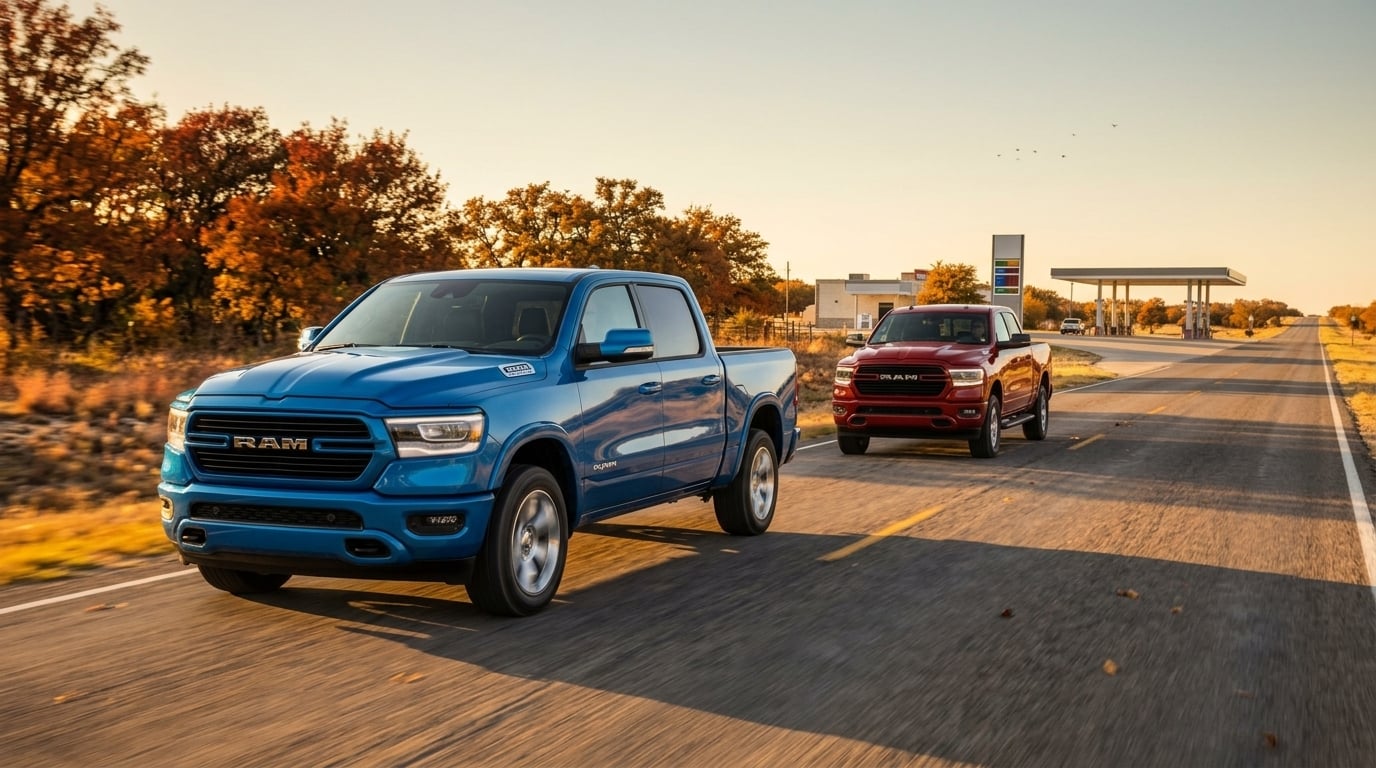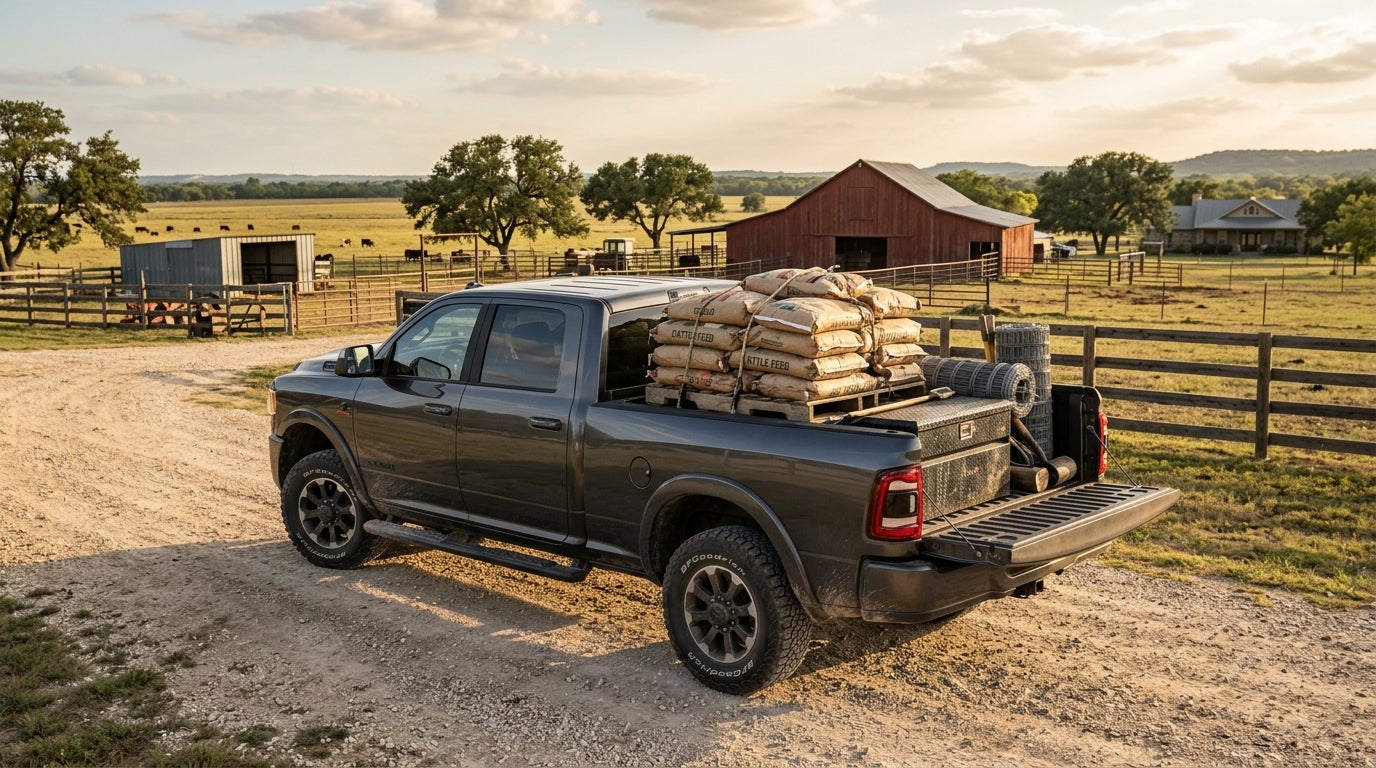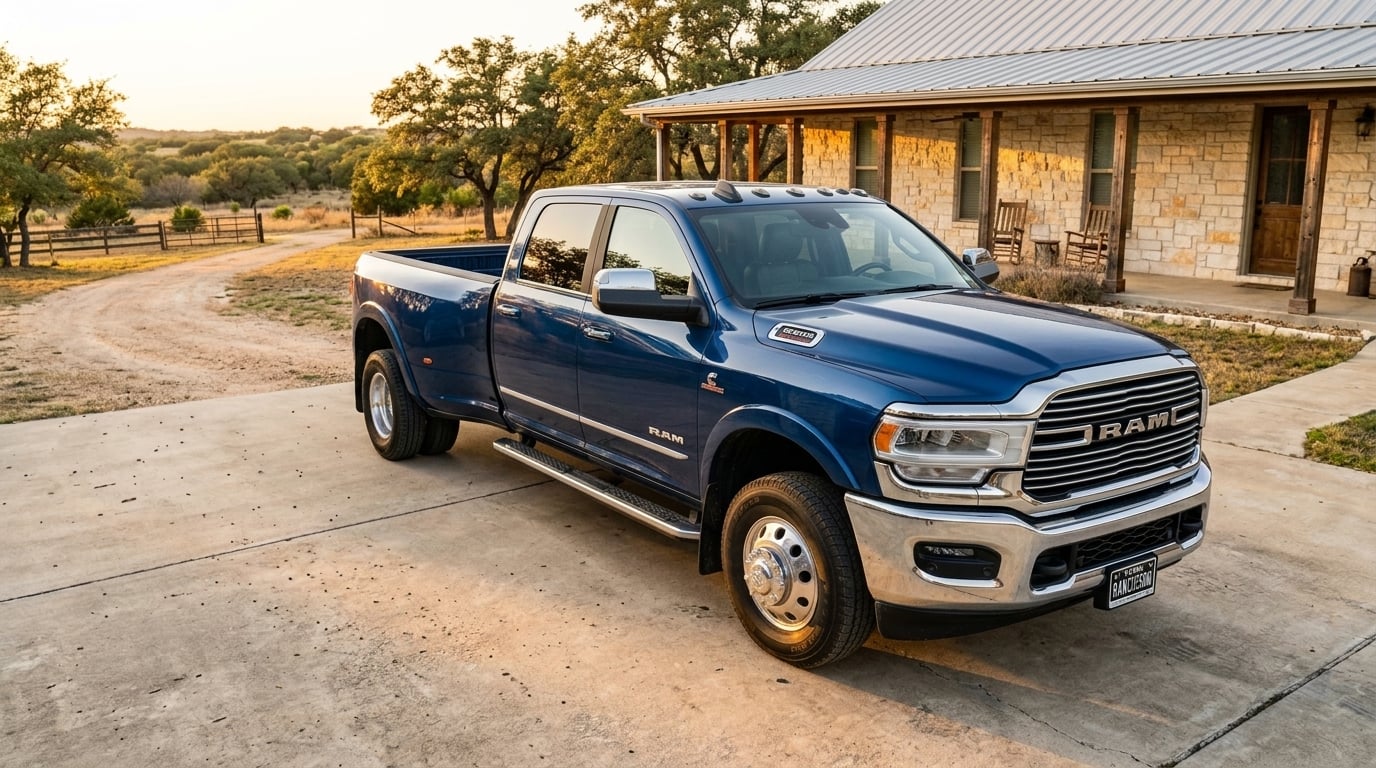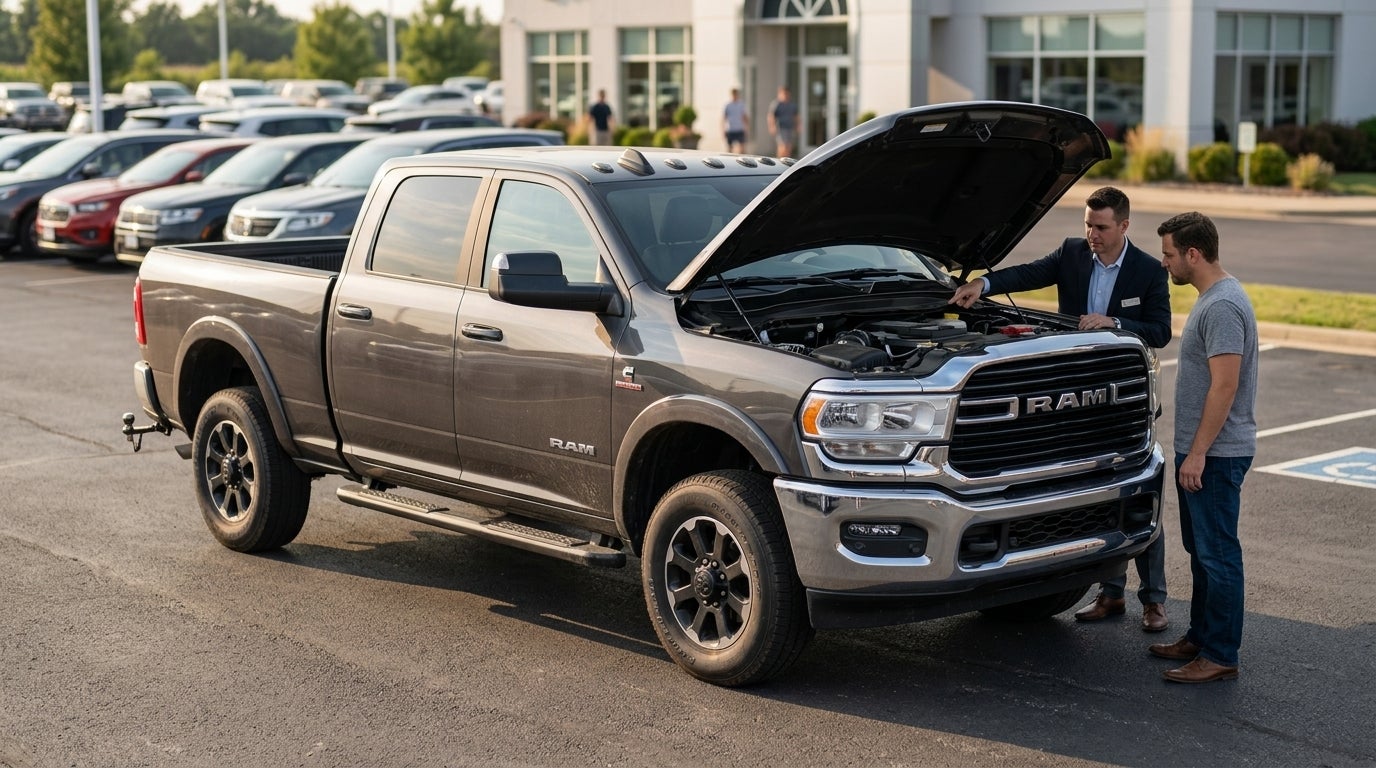



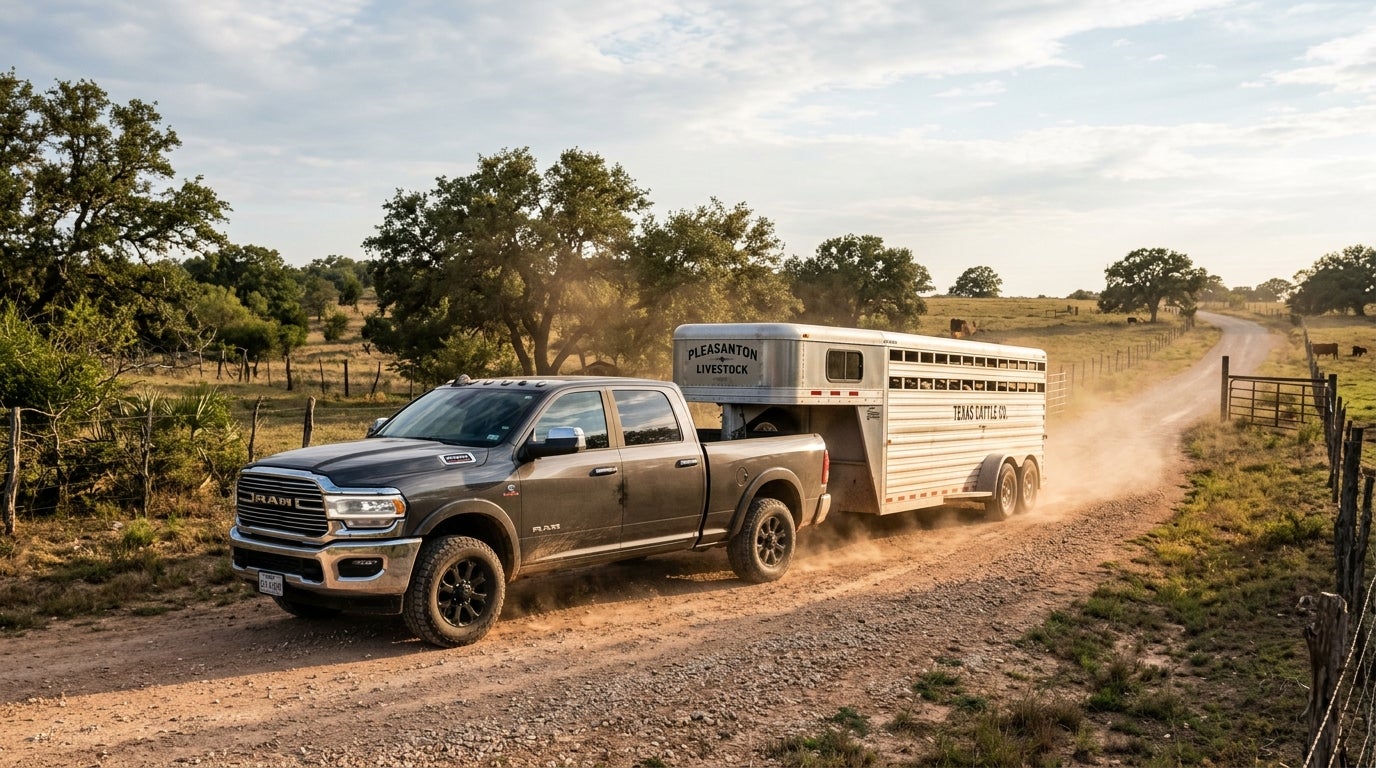
Depending on the engine and chassis configuration, a 2027 Ram truck can pull between 8,110 lbs on a light-duty half-ton model and up to 37,020 lbs on a dual-rear-wheel heavy-duty pickup. The light-duty 2027 Ram 1500 offers a maximum conventional towing capacity of up to 11,560 lbs, while the three-quarter-ton 2027 Ram 2500 reaches a towing ceiling of up to 19,990 lbs when equipped with a turbodiesel powertrain. For maximum towing output, the 2027 Ram 3500 equipped with the High-Output 6.7L Cummins Turbo Diesel I6 engine handles up to 37,020 lbs using a gooseneck hitch arrangement. Whether hauling agricultural machinery or moving livestock trailers across open farmland in Pleasanton, selecting the right Ram truck configuration guarantees you have the exact gross combined weight rating needed for your heavy workload. At All Ways Atascosa CDJR, located at 110128 Interstate Hwy, 37 N, Pleasanton, TX 78064, our team helps truck buyers evaluate axle ratios, cab styles, and payload ratings to match their exact trailering demands. If you have questions about specific tongue weight limits or gross vehicle weight calculations, feel free to drop by our Pleasanton dealership location or give our team a call at (830) 281-2244. Table of Contents What Are the Towing Capacities and Engine Options for the 2027 Ram 1500? How Does 2027 Ram 1500 Towing Compare to Ford F-150 and Chevy Silverado 1500? What Are the Gooseneck and Receiver Towing Capacities for the 2027 Ram 2500 and 3500? How Do Annual Maintenance Costs Compare Between a Ram 1500 and Ram 2500 Diesel? Common Questions About 2027 Ram Truck Towing Specs Take the Next Step Toward Your 2027 Ram Truck What Are the Towing Capacities and Engine Options for the 2027 Ram 1500? The 2027 Ram 1500 achieves its maximum conventional towing capacity of up to 11,560 lbs when equipped with the standard-output 3.0L Twin-Turbo Hurricane I-6 engine and the optional Trailer Tow Group. Base powertrains, such as the 3.6L Pentastar V6 with eTorque, provide up to 8,110 lbs of towing capability, while models fitted with the available 5.7L HEMI V8 eTorque engine are rated for up to 11,370 lbs when properly configured. Engine selection dictates both peak trailering capability and daily highway driving performance in the half-ton lineup. The standard-output 3.0L Twin-Turbo Hurricane I-6 engine delivers substantial low-end torque that makes it the top conventional towing choice in the light-duty family. By contrast, the 3.0L High-Output Twin-Turbo Hurricane I-6 engine is tuned for high-horsepower performance and rapid acceleration, setting its maximum towing ceiling closer to 9,920 lbs. For maximum bed load utility, the 2027 Ram 1500 provides a maximum payload capacity of up to 2,300 lbs in select Quad Cab rear-wheel-drive configurations. Equipping your half-ton pickup with hardware from the Trailer Tow Group —including an integrated trailer brake controller, trailer light check system, trailer tire pressure monitoring, and Trailer Reverse Steering Control —ensures confident handling when backing up large cargo trailers or recreational boats. If you are comparing versatile family vehicles alongside work-ready trucks, you can also explore our new vehicle inventory to view our full lineup of capable models. How Does 2027 Ram 1500 Towing Compare to Ford F-150 and Chevy Silverado 1500? The 2027 Ram 1500 delivers a maximum towing rating of up to 11,560 lbs, positioning it competitively alongside half-ton rivals like the Ford F-150, which tops out at 13,500 lbs, and the Chevrolet Silverado 1500, which reaches up to 13,300 lbs. While competitor trucks advertise slightly higher absolute paper maximums, Ram prioritizes multi-link coil-spring or available air-spring rear suspension engineering to deliver superior ride comfort and unladen handling. Evaluating half-ton pickups requires looking beyond peak spec-sheet figures. The Ram 1500 balances its 11,560 lbs towing threshold and 2,300 lbs payload rating with rear suspension dynamics that reduce rear-end squat and minimize trailer sway during sudden highway maneuvers. Rivals like Ford and Chevrolet rely on traditional leaf-spring setups that can feel stiff and unrefined when driving without a heavy bed load. Additionally, Ram offers upscale cabin appointments and driver-assist tech, including up to 50-plus combined inches of digital display space and advanced multi-view camera systems. For drivers who need dependable pulling power on the job site without sacrificing everyday ride quality, the Ram 1500 delivers an ideal balance for work commuting and family road trips alike. If you are looking for pre-owned pickup choices or pre-inspected light-duty trucks, you can browse our CARFAX 1-owner pre-owned selection for high-quality options. What Are the Gooseneck and Receiver Towing Capacities for the 2027 Ram 2500 and 3500? The 2027 Ram 3500 reaches a maximum gooseneck towing capacity of up to 37,020 lbs when powered by the High-Output 6.7L Cummins Turbo Diesel I6 engine, while the 6.4L HEMI V8 gas engine offers a receiver towing capacity of up to 18,140 lbs. On the three-quarter-ton 2027 Ram 2500, the 6.7L Cummins Turbo Diesel I6 engine increases the towing limit up to 19,990 lbs, compared to 17,730 lbs on the 6.4L HEMI V8 gas powertrain. Heavy-duty hauling demands robust frame architecture and heavy-duty transmission pairing. On the 2027 Ram 3500, the available High-Output 6.7L Cummins Turbo Diesel I6 engine produces 430 hp and 1,075 lb-ft of torque at 1,800 rpm, routed through a reinforced TorqueFlite HD 8-speed automatic transmission. Max Tow configurations pair this torque output with an AAM 12.0-inch rear axle to support high tongue weights. In comparison, the gas 6.4L HEMI V8 engine produces 405 hp and 429 lb-ft of torque through a TorqueFlite 8-speed automatic transmission, yielding a maximum payload capacity of up to 7,680 lbs on single-rear-wheel models, compared to 6,460 lbs on diesel dually variants. For hauling heavy livestock trailers or large fifth-wheel campers through the rolling limestone terrain around Boerne, selecting the available Fifth-Wheel/Gooseneck Prep Package adds a factory-installed rear-axle structural crossmember that transfers vertical pin weight directly into the frame. Buyers can also opt for the Max Towing Package, which bundles fifth-wheel prep, a cargo-view camera, and available auto-leveling rear air suspension to simplify trailer coupling. When truck buyers visit our showroom floor, they often examine how the bed-mounted 7-pin electrical connector and hitch anchor covers align before calculating their total gross combined weight. Before upgrading your current truck, you can value your trade online to see what your current vehicle is worth. How Do Annual Maintenance Costs Compare Between a Ram 1500 and Ram 2500 Diesel? Annual routine maintenance costs for a heavy-duty Ram 2500 diesel average between $1,200 and $1,500, compared to approximately $700 to $900 per year for a gas-powered Ram 1500. The variance in annual operating expenses reflects larger oil fluid capacities, specialized fuel filter replacement cycles, and diesel exhaust fluid upkeep on heavy-duty powertrains. Evaluating maintenance economics helps truck owners pick the right platform for their long-term ownership goals. The light-duty Ram 1500 uses standard synthetic engine oil volumes and standard service intervals, keeping routine maintenance straightforward. On the heavy-duty Ram 2500 diesel, the 6.7L Cummins Turbo Diesel I6 engine requires up to 12 quarts of engine oil per service, dual fuel filter changes at recommended intervals, and periodic topping off of diesel exhaust fluid. While annual routine upkeep is higher on heavy-duty diesel trucks, the Cummins engine provides long-term commercial durability and excellent resale value retention over time. Gas-powered pickups like the Ram 1500 feature lower routine service costs, making them highly economical for daily commuting and lighter towing tasks. To keep your truck running strong, you can easily schedule your oil change with our certified service team, or explore auto financing options to customize a payment structure that fits your monthly budget. Common Questions About 2027 Ram Truck Towing Specs Q: What package is required to achieve maximum towing on a Ram 1500? The 2027 Ram 1500's peak towing capability of 11,560 lbs is achieved through a specific combination of engine and towing package options. This package equips the truck with a Class IV receiver hitch, integrated trailer brake controller, trailer light check system, trailer tire pressure monitoring, and trailer reverse steering control for optimal trailering stability. Q: Can the 2027 Ram 2500 be fitted with a factory gooseneck hitch? Yes, the 2027 Ram 2500 offers an available factory Fifth-Wheel/Gooseneck Prep Package across most trim levels, including Tradesman, Big Horn, Laramie, and Limited. This option integrates a heavy-duty structural crossmember directly into the frame behind the rear axle, providing pre-drilled mounting holes for a bed-mounted gooseneck ball and fifth-wheel rail brackets along with an in-bed 7-pin electrical connector. Q: What is the maximum payload rating on a 2027 Ram 3500? The 2027 Ram 3500 delivers a maximum payload capacity of up to 7,680 lbs when configured with the 6.4L HEMI V8 gas engine in a 4x2 regular cab dual-rear-wheel setup. Diesel-equipped 3500 models offer a maximum payload ceiling of up to 6,460 lbs, as the heavier diesel engine assembly uses a larger portion of the overall gross vehicle weight rating. Q: How does the Automatic Smart Exhaust Brake work when towing heavy loads? The Automatic Smart Exhaust Brake on Cummins-powered Ram heavy-duty trucks restricts exhaust gas flow to generate backpressure, using engine compression to slow the vehicle down steep highway descents. This system reduces service brake wear and heat buildup on your trailer brakes, giving drivers smooth, controlled deceleration when hauling heavy gooseneck or fifth-wheel loads. Q: What documents should I bring to the dealership when purchasing a new Ram truck? When visiting the dealership to complete your purchase, you should bring a valid driver's license, current proof of auto insurance, your two most recent pay stubs or proof of income, and title or registration documents if you plan to trade in a vehicle. Having these items organized streamlines the paperwork process and speeds up loan approval with lenders. To learn more about our team and customer care policies, you can learn more about our team or discover how our customer appreciation efforts supports local truck buyers. Take the Next Step Toward Your 2027 Ram Truck Selecting the ideal 2027 Ram truck comes down to matching your maximum trailer weight, tongue load, and daily driving requirements with the right engine and axle setup. Whether you need a nimble half-ton Ram 1500 for everyday commutes or a dual-rear-wheel Ram 3500 for heavy commercial hauling, our sales team is ready to walk you through every specification. At Allways Atascosa CDJR, we take pride in offering straightforward vehicle guidance and trusted maintenance care for truck owners across South Texas. When you are ready to explore truck configurations or test drive a new model, stop by visit our Pleasanton showroom or contact our team directly at (830) 281-2244 to get started today. © 2026 Allways Atascosa CDJR. All rights reserved.
What Routine Maintenance Schedule Do Ram and Jeep Vehicles Require?
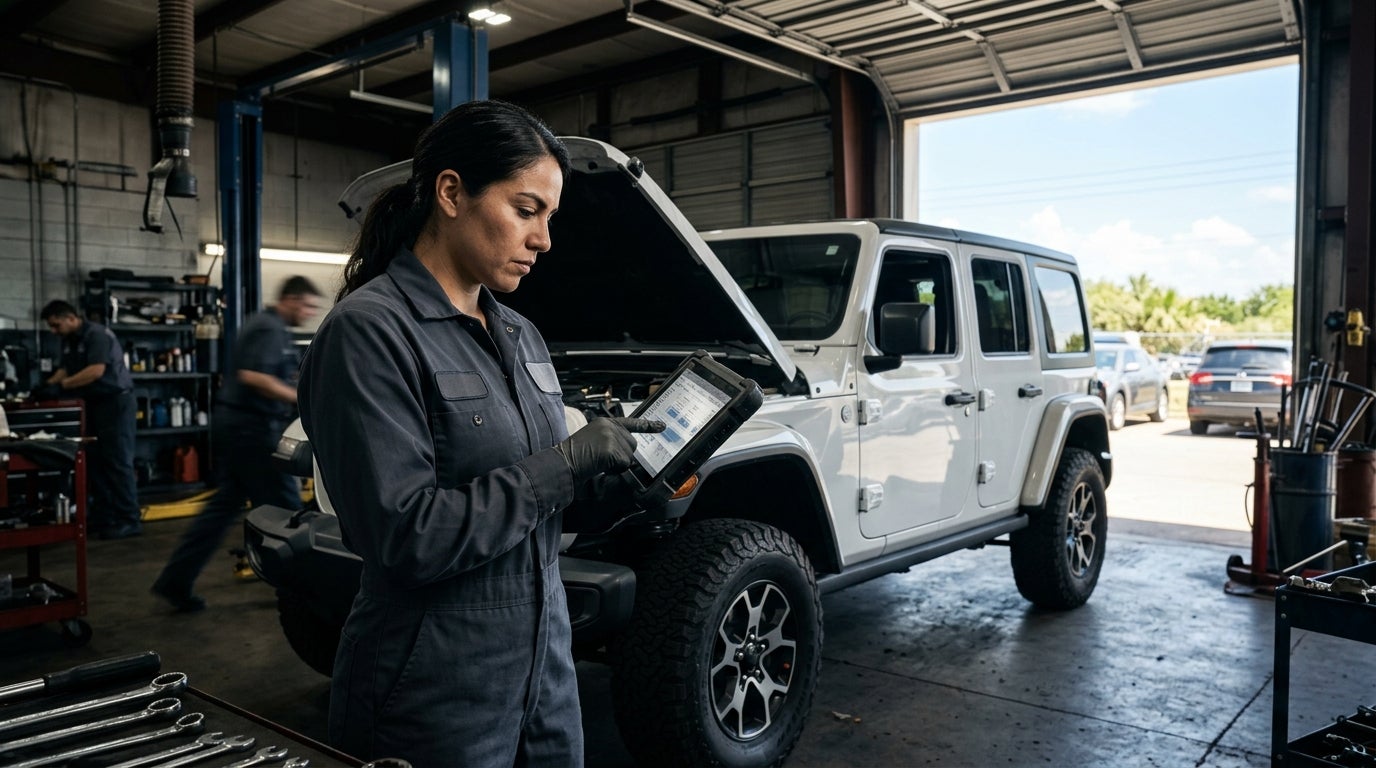
Ram trucks and Jeep SUVs require routine preventative maintenance every 8,000 to 10,000 miles or 12 months, starting with synthetic engine oil changes, tire rotations, and comprehensive brake inspections. Driveline components on 4x4 models demand transfer case and differential fluid inspections every 20,000 to 30,000 miles, while heavy-duty diesel engines and plug-in hybrid powertrains follow dedicated service intervals for fuel filtration and high-voltage thermal cooling systems to maintain maximum durability and protect factory warranty coverage. Following a strict maintenance calendar ensures your truck or SUV performs reliably under demanding South Texas driving conditions. Open farmland, agricultural towing, and hot summer temperatures accelerate thermal degradation of vital engine oils and gear lubricants. Establishing a consistent maintenance routine prevents premature mechanical wear before minor component degradation leads to costly driveline repairs. Standard maintenance milestone intervals include: 5,000 to 8,000 Miles: Engine oil and filter change, tire rotation, tire pressure check, brake pad and rotor inspection, fluid level check, and multi-point visual inspection. 15,000 Miles: Cabin air filter replacement, engine air filter check, steering link inspection, and front suspension greasing on heavy-duty models. 20,000 to 30,000 Miles: Brake fluid flush, front and rear differential fluid inspection, transfer case fluid replacement for vehicles frequently used for towing or off-road driving, and air conditioning filter replacement. 60,000 Miles: Complete front and rear axle fluid service, transmission fluid and filter check, engine coolant inspection, spark plug replacement on select gasoline engines, and serpentine belt replacement. Vehicle owners navigating daily work routines around Pleasanton can trust our certified technicians to complete every service milestone using factory procedures. To discuss your maintenance calendar or ask questions about your vehicle, reach our service team directly at (830) 281-2244 or drop by our service department in Pleasanton for a complete multi-point inspection. Table of Contents How Often Does a Ram 6.7L Cummins Diesel Require Fuel Filter Service? What Maintenance Is Recommended for Jeep 4xe Plug-In Hybrid Models? Does Installing Aftermarket Lift Kits Void a Jeep Warranty? Are Mopar Service Contracts Worth Purchasing for Ram and Jeep Vehicles? Why Choose Certified Dealership Service Over Independent Repair Shops? What Maintenance and Repair Services Does Allways Atascosa CDJR Offer Near San Antonio? Frequently Asked Service Questions for Ram and Jeep Owners Keep Your Vehicle Running Strong at Allways Atascosa CDJR How Often Does a Ram 6.7L Cummins Diesel Require Fuel Filter Service? Ram 2500 and 3500 heavy-duty trucks powered by the 6.7L Cummins Turbo Diesel engine require both fuel filters to be replaced every 15,000 miles or 12 months, whichever comes first. Heavy-duty diesel injection systems operate at high fuel pressures, making clean, water-free fuel vital to protecting precision injectors and high-pressure fuel pumps from severe abrasion and corrosive damage. The diesel fuel management system utilizes a dual-filter architecture designed to trap microscopic particles and separate emulsified moisture: Under-Hood Primary Filter: Mounted directly in the engine compartment, this filter traps fine particulate matter down to microscopic micron thresholds before fuel reaches the high-pressure injection pump. Chassis-Mounted Fuel/Water Separator: Located near the fuel tank along the frame rail, this secondary unit separates water from incoming fuel and includes a water-in-fuel sensor that triggers a dashboard warning when accumulated moisture needs draining. Truck owners bringing in a heavy-duty pickup for routine maintenance usually ask whether both diesel fuel filters need to be changed at the same time. Certified technicians always replace both filters simultaneously using genuine OEM Mopar filter elements to maintain correct system flow rates and water separation efficiency. Skipping or delaying fuel filter service allows trapped contaminants to bypass saturated media, causing premature wear on expensive fuel injectors and fuel rail pressure regulators. For truck owners operating heavy equipment or hauling livestock trailers across South Texas, adhering to strict 15,000-mile fuel filter service stops unexpected fuel starvation issues on the highway. Drivers researching capable heavy-duty trucks can explore our latest new Ram selection to learn more about advanced diesel engine engineering and capability. What Maintenance Is Recommended for Jeep 4xe Plug-In Hybrid Models? Jeep 4xe plug-in hybrid models require standard internal combustion engine maintenance—such as synthetic engine oil changes every 10,000 miles—alongside specialized electrical inspections of the 350-volt high-voltage battery cooling circuit and regenerative braking components. Combining a 2.0L Turbo I4 engine with electric drive motors creates a dual-powertrain system that benefits from specialized factory diagnostic scans during every routine visit. Because 4xe hybrid models frequently drive short distances in full-electric drive mode, the gasoline engine may remain off for extended periods. This operation pattern can allow fuel to age in the tank and water vapor to condense inside the engine crankcase. Depending on driving patterns, the gasoline engine may run periodically to help maintain normal operating conditions and support recommended maintenance. Key maintenance services required for 4xe plug-in hybrid models include: High-Voltage Battery Cooling Loop: Inspection of specialized coolant lines, electric water pumps, and fluid levels that regulate battery temperature during fast charging and hard acceleration. Regenerative Braking Systems: Friction brake pads often last longer on hybrid models due to electric motor retardation, but physical brake calipers, slide pins, and rotors require periodic cleaning and lubrication to prevent corrosion and sticking. Diagnostic Module Scans: Connecting factory wiTECH diagnostic tools during oil changes to verify hybrid control module software updates, battery cell balancing, and power inverter module integrity. Brake Fluid Replacements: Replacing hydraulic brake fluid every 24 months to preserve anti-lock braking performance and prevent internal master cylinder corrosion. Exploring scenic back roads and limestone trails around Boerne demonstrates the smooth power transition between electric drive and gasoline engine power. Routine service at an authorized dealership ensures the hybrid power inverter, electric drive motor, and battery conditioning systems operate harmoniously for maximum efficiency and trail performance. Does Installing Aftermarket Lift Kits Void a Jeep Warranty? Installing an aftermarket suspension lift kit does not automatically void an entire Jeep factory warranty, but factory warranty coverage will not pay for component failures directly caused by non-OEM suspension modifications. Under federal warranty regulations, the vehicle manufacturer must demonstrate that an aftermarket part caused or contributed to a specific mechanical failure before denying a warranty claim on that component. When an unapproved aftermarket lift kit alters factory suspension geometry, it changes the operating angles of driveline shafts, steering linkages, and suspension arms. If an aftermarket lift causes accelerated wear or structural failure on related factory components, those repairs fall outside factory coverage. Potential warranty impacts from non-factory suspension modifications include: Driveline Components: Extreme driveshaft angles caused by excessive lift height can cause universal joint binding, transfer case output seal leaks, or differential bearing wear not covered under the factory powertrain warranty. Steering and Suspension: Modification of control arms, track bars, or steering knuckles can lead to premature ball joint failure, power steering gear stress, or electronic stability control calibration errors. Electronic Safety Features: Altering ride height shifts the calibration window for forward-facing cameras and ParkSense® radar sensors, potentially disabling factory driver-assist systems until recalibrated. Mopar Lift Kit Advantage: Choosing an official Mopar lift kit installed by authorized dealer technicians can help support factory warranty protection, as Mopar performance accessories are engineered and tested specifically for your vehicle. Drivers looking to enhance ground clearance and trail capability for off-road recreation should consult with service advisors before selecting suspension hardware. Certified technicians verify that performance modifications comply with manufacturer guidelines while protecting surrounding factory components. Are Mopar Service Contracts Worth Purchasing for Ram and Jeep Vehicles? Mopar service contracts are worth purchasing because they can help protect owners from unexpected mechanical and electrical repair expenses after factory warranty coverage expires and may help reduce exposure to changing labor and parts costs. Factory-backed protection plans are honored at authorized Chrysler, Dodge, Jeep, and Ram dealerships nationwide, ensuring all covered repairs use genuine OEM parts installed by brand-certified technicians. Modern trucks and SUVs incorporate sophisticated electronics, active safety sensors, multi-stage turbochargers, and complex 4x4 transfer cases. While mechanical components are engineered for long-term durability, replacing advanced modules or internal driveline parts out-of-warranty can create significant out-of-pocket costs. FlexCare Vehicle Protection plans allow owners to customize protection levels based on ownership duration, annual mileage habits, and budget preferences. Key service contract options include: Extended Care Premium: Provides comprehensive mechanical coverage on over 5,000 vehicle components, extending factory bumper-to-bumper protection across engine, transmission, electrical, steering, air conditioning, suspension, and high-tech safety modules. Extended Care Plus: Delivers targeted coverage for over 800 major mechanical components, protecting primary driveline, braking, fuel, and electrical systems. Road Hazard Tire and Wheel Protection: Covers full replacement or repair costs for all four wheels and tires damaged by road hazards, including mounting, balancing, and stem hardware for both OEM and approved aftermarket setups. Auto Appearance Care: Utilizes specialized Paintless Dent Repair processes to restore exterior body panels without disturbing factory paint or requiring body fillers. Purchasing a genuine Mopar service contract provides peace of mind on every journey. If an unexpected component failure occurs away from home, plans include rental car allowances, towing reimbursement, and nationwide roadside assistance, ensuring you are never left stranded without support. Why Choose Certified Dealership Service Over Independent Repair Shops? Choosing certified dealership service over independent repair shops helps ensure your vehicle receives care from technicians trained directly by the manufacturer, using vehicle-specific tools and genuine OEM Mopar parts. Independent shops often rely on multi-brand generic scan tools and aftermarket replacement parts that may not match strict factory engineering tolerances or software protocols. Key operational advantages of certified dealership care include: Factory-Trained Technicians: Service technicians undergo continuous technical instruction from Stellantis training academies, specializing in Ram truck torque specifications, Jeep 4x4 driveline service, and 4xe plug-in hybrid electrical systems. wiTECH Diagnostic Equipment: Certified facilities utilize proprietary wiTECH diagnostic hardware connected directly to factory technical databases, enabling instant software flashes, module coding, and accurate electrical troubleshooting. Genuine OEM Mopar Parts: Every replacement brake pad, filter, belt, and suspension arm is built to original factory specifications, backed by a 2-year/unlimited-mileage Mopar parts warranty. Recall and Campaign Coverage: Dealership computer networks automatically check for outstanding manufacturer recall updates—such as central vision processing module software updates or air bag clock spring replacements—and perform required repairs at no charge to the owner. Maintaining a complete service history through an authorized dealership also preserves vehicle resale value and establishes documented proof of proper maintenance should warranty questions ever arise. What Maintenance and Repair Services Does Allways Atascosa CDJR Offer Near San Antonio? Allways Atascosa CDJR provides complete automotive care for Ram trucks and Jeep SUVs, offering everything from rapid maintenance in our express service lane to advanced engine diagnostic work and heavy driveline overhauls. Located conveniently along Interstate 37, our modern service center features dedicated heavy-duty truck lifts, specialized hybrid service bays, and state-of-the-art wheel alignment racks. Our comprehensive service department capabilities include: Express Maintenance: Synthetic oil and filter changes, tire rotations, battery replacements, wiper blade installations, and fluid top-offs completed quickly without sacrificing thoroughness. Brake and Suspension Care: Disc brake pad and rotor replacements, brake line flushes, shock absorber updates, wheel bearing replacements, and electronic power steering calibrations. Diesel and Heavy Truck Repair: Fuel filter replacements, turbocharger service, exhaust fluid system repairs, fuel injector testing, and transmission fluid flushes for 6.7L Cummins Turbo Diesel powertrains. 4x4 Driveline Service: Front and rear differential gear oil changes, transfer case fluid flushes, universal joint replacements, and axle seal repairs for off-road models like the Rubicon. Advanced Engine Diagnostics: Computerized engine light troubleshooting, cooling system pressure testing, radiator replacements, and serpentine belt installations. Vehicle owners looking for fast, expert care can drop by our facility at 110128 Interstate Hwy, 37 N, Pleasanton, TX 78064, call our service desk at (830) 281-2244, or conveniently schedule your next service appointment online. Frequently Asked Service Questions for Ram and Jeep Owners Q: What is included in a complimentary Mopar multi-point inspection? A complimentary multi-point inspection includes a visual and mechanical check of your vehicle's critical safety and operational systems. Technicians inspect brake pad thickness, tire tread depth and inflation pressure, battery state of health, engine air and cabin filters, drive belts, steering linkages, and vital fluid levels including engine oil, coolant, transmission fluid, and brake fluid. Q: How often should transfer case and differential fluids be replaced on 4x4 models? Front and rear differential fluids, along with transfer case fluid, should be inspected every 20,000 to 30,000 miles. Complete fluid replacement is typically recommended between 30,000 and 60,000 miles. Vehicles frequently used for heavy towing, plowing, or off-road driving require fluid changes closer to the 30,000-mile mark to prevent gear teeth scoring and bearing wear. Q: Can dealership technicians service official Mopar accessories installed on my vehicle? Yes, certified dealership technicians are fully qualified to install, diagnose, and repair all official Mopar accessories, including suspension lift kits, performance exhausts, trailer hitches, side steps, and auxiliary LED lighting packages. Installing Mopar accessories through an authorized dealer ensures proper fitment and protects factory vehicle electronics. Q: What emergency assistance is available if my vehicle breaks down on the road? New vehicles under factory warranty include roadside coverage for emergency towing, battery jump-starts, flat tire changes, fuel delivery, and lockout services. For immediate assistance during an unexpected roadside event, contact Chrysler, Dodge, Jeep, Ram Roadside Assistance: (800) 521-2779 to coordinate factory-authorized towing directly to our service facility. Q: What happens during a hybrid battery coolant inspection on a 4xe model? During a hybrid battery coolant inspection, technicians check the separate low-temperature cooling circuit that regulates high-voltage battery temperatures. Service includes verifying coolant fluid levels, checking hoses for leaks or abrasion, testing fluid freeze point protection, and checking electric coolant pumps for proper diagnostic codes using factory scan tools. Keep Your Vehicle Running Strong at Allways Atascosa CDJR Regular maintenance is the most effective way to protect your vehicle investment, maintain towing and off-road capability, and prevent unexpected breakdown costs. Whether your truck requires a routine oil change, diesel fuel filter service, or 4x4 driveline inspection, our factory-certified technical team delivers fast, reliable care tailored to your driving schedule. Trusting your truck or SUV to certified technicians ensures every service uses genuine OEM Mopar parts designed specifically for your model. Take the next step in protecting your vehicle's long-term performance by contacting our service advisors today to reserve your spot on the lift. © 2026 Allways Atascosa CDJR. All rights reserved. Vehicle specification data © JATO Dynamics Limited.